If you have ever stood in the craft store staring at the heat transfer vinyl rack and wondering why a single roll costs as much as a whole pizza, I have been exactly there. I am Darla, and I press shirts out of my spare bedroom in Lincoln, Nebraska. I started three years ago making team shirts for my grandson Caleb's youth baseball squad, and somewhere along the way the folding table in my craft room became a small side hustle for church groups, family reunions and the fall craft fair. The YUITCE HTV Bundle is the vinyl I have reached for more than any other since I stopped scorching shirts and started actually knowing what I was doing.
This is not a first-week impression. I have kept this bundle on my shelf for about three years, reordering whenever a pack runs low, and put it through everything from a one-off birthday tee to a dozen reunion shirts that had to survive a potluck and a washer that has seen better days. Here is what I would tell a friend who asked whether it is worth it.
The Quick Verdict
A solid, budget-friendly bundle that cuts cleanly, presses reliably and holds up in the wash. The color variety is the real draw, and the learning curve is gentle enough for a true beginner.
Amazon Check Today's Price →The bundle I keep reaching for
If you are tired of paying craft-store prices for single rolls, this 37-pack gives you a working palette for less than you would expect. Check today's price on Amazon and see if it fits your craft room budget.
Amazon Check Today's Price on Amazon →How I've Used It
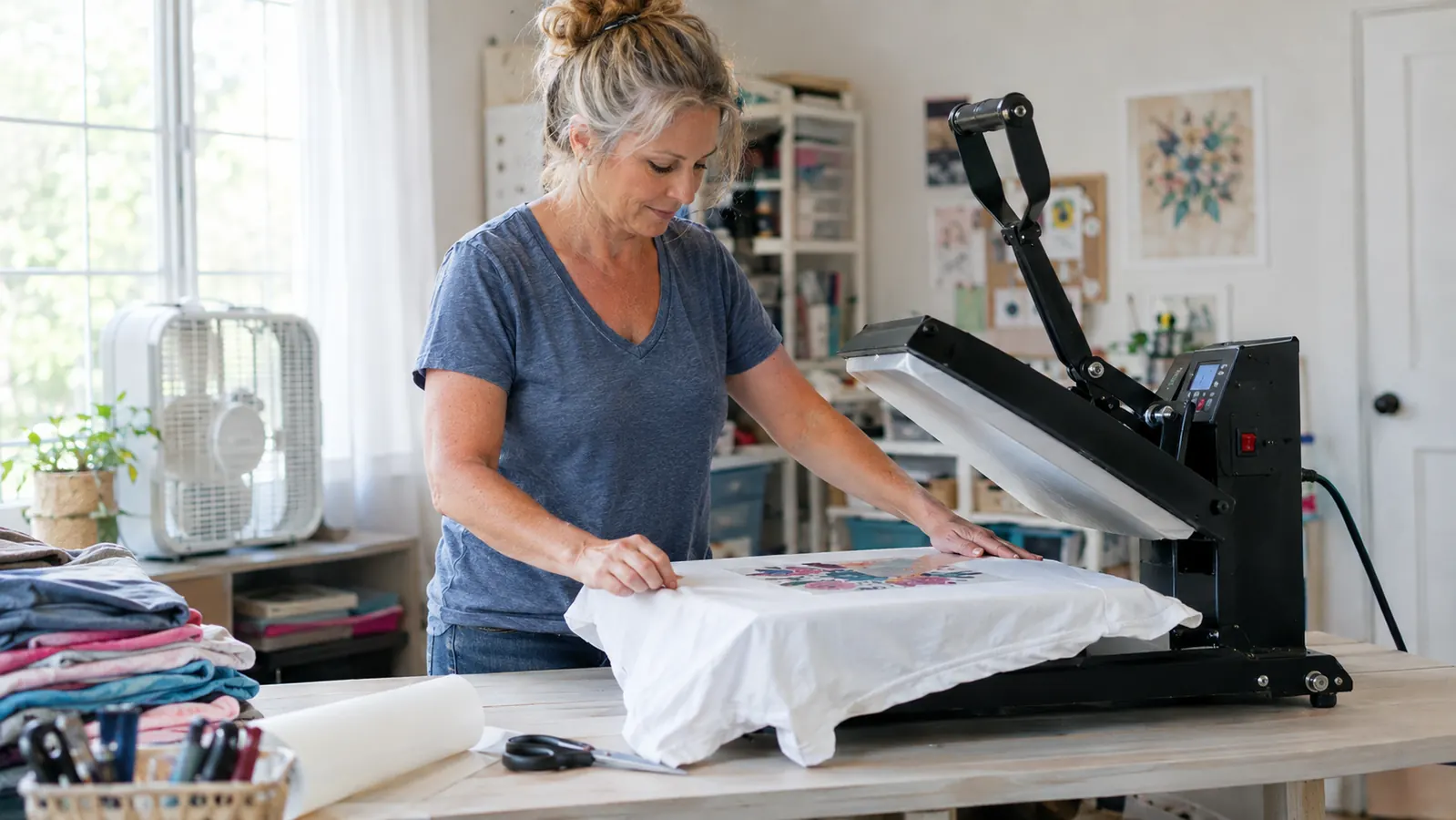
My setup is not fancy. A long folding table, a wire shelf of blanks, a box fan in the window, and a heat press that has survived three years of my learning curve. I use YUITCE sheets for the jobs that used to make me nervous: names and numbers on baseball jerseys, little monograms on tote bags, and the occasional mug that I should probably leave to the sublimation blanks. The mug experiment lasted one afternoon and produced exactly one usable cup, so now I stick to shirts and totes and let the sublimation blanks do the mug work.
The bundle comes as 37 sheets, each 12 by 10 inches, in more than 20 colors. That is enough variety that I rarely have to order a single color for a small job. Take the women's group at church last September. They needed forty shirts in two colors for a fall retreat, and they needed them in ten days. I had both colors on the shelf already, cut the designs on a Tuesday evening, weeded them at the kitchen table while Ron watched the news, and pressed all forty across two afternoons. The whole job cost me a few evenings, not a week of waiting on a shipping box. When Caleb's team needed new numbers halfway through the season, I did the same thing, cut the whole set one Saturday morning and had the shirts ready before the car was loaded for the game.
I have pressed onto cotton tees, poly-blend shirts, canvas tote bags and a few things that probably were not ideal for vinyl. The poly-blend shirts came out fine as long as I kept the temperature down and used a pressing cloth. The canvas totes needed a few extra seconds of dwell time, and once I figured that out they held up through the whole craft fair season. I have made mistakes with it, too, and the mistakes were mostly mine, not the vinyl's. I learned the hard way that a too-hot press and too-long dwell time will melt a carrier sheet, and that is true of every brand I have tried. The first time it happened I was pressing a name onto a dark shirt about twenty degrees hotter than the vinyl wanted, and the carrier sheet wrinkled and stuck to the design. I peeled it off, cut the name again, and it pressed perfectly at the right setting. That is the whole story of learning this craft: one ruined shirt, one do-over, and you remember the number next time.
What's Actually in the Box
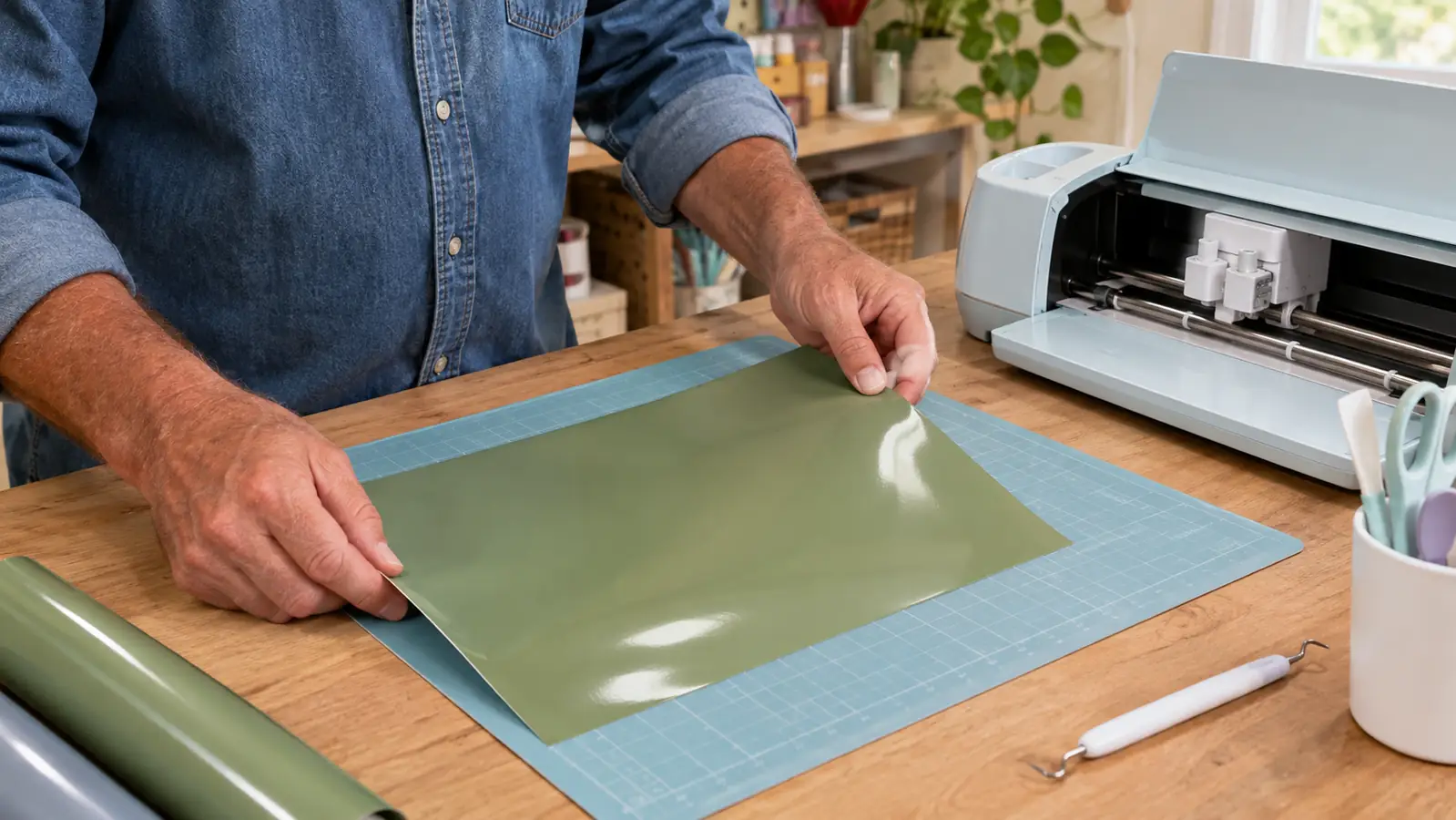
The headline number is 37 sheets, and that is what you get. Each sheet is 12 by 10 inches, which is a good working size for most shirt designs. A name and number for a baseball jersey fits on one sheet with room to spare, and I can cut a small monogram out of the leftover corner. For the occasional bigger design, I have cut pieces from two sheets and weeded them together, which works fine as long as you line up the carrier sheets carefully. You are not getting a few big rolls and a bunch of scraps; you are getting a stack of full sheets in a range of colors that covers the basics and then some.
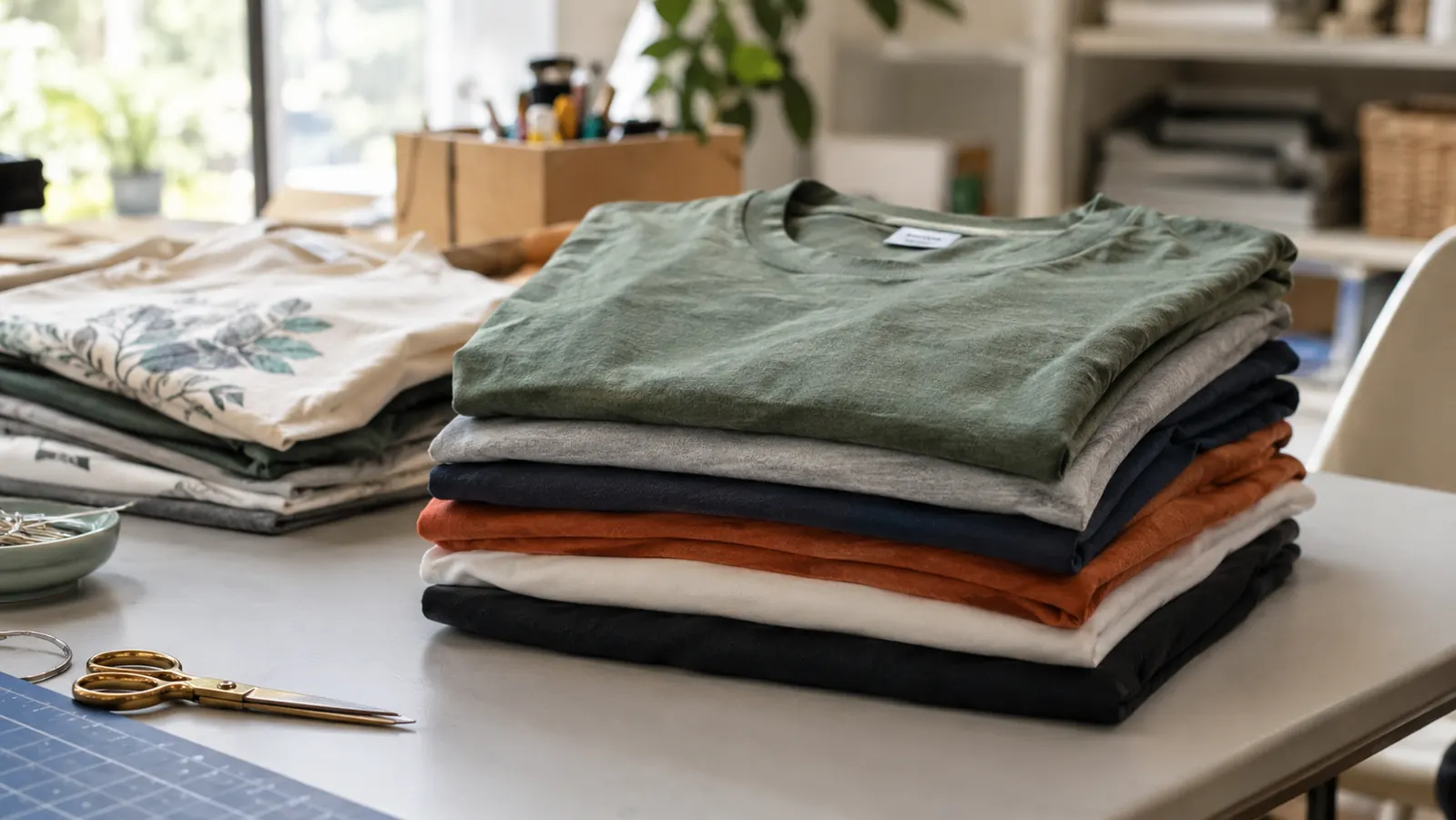
The colors are where this bundle earns its keep. More than 20 assorted colors means white, black and the usual suspects, plus enough variety for team colors, holiday orders and the kind of requests that come in from a church group in September. I have used the same bundle for a red-and-gold family reunion, a blue-and-white school spirit order, and a set of pink shirts for a fundraiser. The reunion order was thirty shirts for my husband's side of the family, and they wanted gold lettering on red shirts, a combination I would have had to special-order from the craft store. I had both colors in the stack. I did not have to buy a single extra sheet for any of those jobs, and the bundle still had plenty of white and black left for the next order.
One thing I will say plainly: the sheets are not the thickest vinyl I have ever handled. They are a standard weight, and they work fine on cotton and cotton blends. I have also used them on the poly-blend shirts the school orders for spirit days, and they have held up there too, as long as I keep the temperature where it should be. If you are pressing onto something delicate or stretchy, you will want to test a scrap first, which is good advice with any vinyl. I keep a scrap box under my table for exactly that purpose, so I can test a setting without wasting a full sheet.
Cutting and Weeding: Where It Wins
I cut most of my designs with a cutting machine, and YUITCE has played nicely with it from the start. The carrier sheet is firm enough that it does not wrinkle when it goes through the machine, and the vinyl releases cleanly. I have had brands where the sheet shifts mid-cut and ruins a name; I have not had that problem with this bundle. My settings have stayed the same for the whole year: standard blade, a pressure setting in the middle of the range, and the vinyl preset on the machine. I have never had to fiddle with it. That consistency matters when you are cutting forty names in one sitting, because the last name should come out as clean as the first.
Weeding is the part that used to make me grumble. Tiny letters and thin script can be a nightmare if the vinyl does not lift cleanly from the carrier. YUITCE weeds well. The excess pulls away without taking the design with it, and the letters stay put. I still use a weeding hook for the small stuff, but I am not fighting the material the way I did with my first cheap bundle. The best test came with the fall retreat shirts, because the design used a thin script with letters about a quarter of an inch tall. I was sure half of them would tear. They did not. I weeded all forty in about two hours with a show playing on my tablet, and I only had to re-cut one letter, and that was because I pulled too hard, not because the vinyl let go.
For a beginner, this matters more than the color count. If you have never weeded a name before, you want a vinyl that forgives a shaky hand. This one does. My first few attempts had a few wobbly letters, but the vinyl itself never tore or stretched out of shape. I remember the first name I ever weeded, back when I was pressing for Caleb's team in the beginning. I used the wrong blade pressure, the letters came out half cut, and I still managed to weed the whole thing without wrecking it. A less forgiving vinyl would have made that first attempt a lot more expensive.
Pressing and Wash Testing
I press most cotton shirts at about 300 degrees for twelve to fifteen seconds with medium pressure, and I let the shirt cool completely before I peel the carrier. That cool-down step is the one I skipped in my early days, and it cost me more than one wavy design. YUITCE has pressed reliably across all of those settings. The transfer comes off the carrier cleanly, and the design adheres well to the shirt. On dark fabrics I use a pressing cloth for the first press, and I have never had the carrier sheet stick or leave a shine behind.
The real test, though, is the wash. A shirt that looks great on the table and peels after three washes is not worth the vinyl it is printed on. I have washed my own test shirts dozens of times, and I have washed the shirts I made for Caleb's team through a whole season of grass stains and gym bags. Every time they came out of the dryer, I ran my thumb along the edges of the letters to feel for anything lifting. The designs have held up. Edges are still down, colors have not faded, and I have not had a single peel on a properly pressed shirt. One of my test shirts has been through maybe thirty washes at this point, and the only thing that has changed is that the shirt itself is starting to fade, which is the cotton's story, not the vinyl's.
I will add the honest caveat: the bond is only as good as the press. If you under-press, or you press a shirt that has fabric softener in it, you will get peeling, and it will not be the vinyl's fault. The shirt that taught me was one I made for Ron, pressed at ten degrees too low because I was in a hurry to get to the store. It looked perfect coming off the press, and it peeled after the second wash. I re-did it the next morning at the right temperature, and that shirt is still in his drawer a year later. I ruined a few early shirts learning that lesson, and I would rather you learn it from me than from a ruined order.
What I Liked
- 37 full sheets in more than 20 colors, so small orders rarely need a special order
- Cuts cleanly and weeds easily, even for a beginner with a shaky hand
- Presses reliably on cotton and cotton blends
- Held up through dozens of washes in my own testing
- A forgiving price for learning on, so mistakes do not hurt
Where It Falls Short
- Not a heavy commercial-grade vinyl
- Best on cotton and cotton blends, not stretchy fabrics
- If you need one color in bulk, you will still want a single roll
The real test is the wash, and these designs have held up through a whole season of youth baseball and a washer that has seen better days.
Who This Is For
This bundle is for the home crafter who is tired of paying single-roll prices and wants a working palette without a big investment. It is for the beginner who is still learning to weed and press and does not want to practice on expensive vinyl. It is for the person making team shirts, family reunion shirts and church group orders, the small jobs that do not need a commercial roll. If that sounds like your craft room, this is the bundle that lets you say yes to the order that comes in on a Tuesday and has to be done by Friday.
If you are just starting out, this is a smart first bundle. You get enough colors to experiment, enough sheets to make mistakes, and a price that will not make you cry when you scorch your first shirt. I scorched a few, and I am glad I did it on a bundle like this instead of on a single roll that cost four times as much per square foot. When I started, I went through three sheets on my first name alone, and it would have stung a lot more if each of those sheets had cost what the craft store charges for one roll.
Who Should Skip It
If you are pressing professionally, day in and day out, with a commercial heat press and orders measured in hundreds, you will probably want a heavier vinyl and bulk rolls. This bundle is a home-crafter tool, not a production line supply. The sheets are 12 by 10, which is perfect for a shirt front, but if you are doing big back prints all day, you will be piecing sheets together, and that is not how a production shop should work.
If you do a lot of stretchy fabrics, like performance tees or athletic wear, you will want a stretch vinyl made for that job. YUITCE works best on cotton and cotton blends, and I would not recommend it for a legging order or a swim team suit. And if you need one specific color in large quantity, a single roll is still the better buy. The bundle is about variety, not volume. For my kind of work, the variety is exactly the point, but I would not want you to buy it expecting a commercial-grade supply.
A working palette without the craft-store markup
If this sounds like the bundle that fits your craft room, check today's price on Amazon. It is the one I keep on my shelf for team shirts, reunion orders and everything in between.
Amazon Check Today's Price on Amazon →