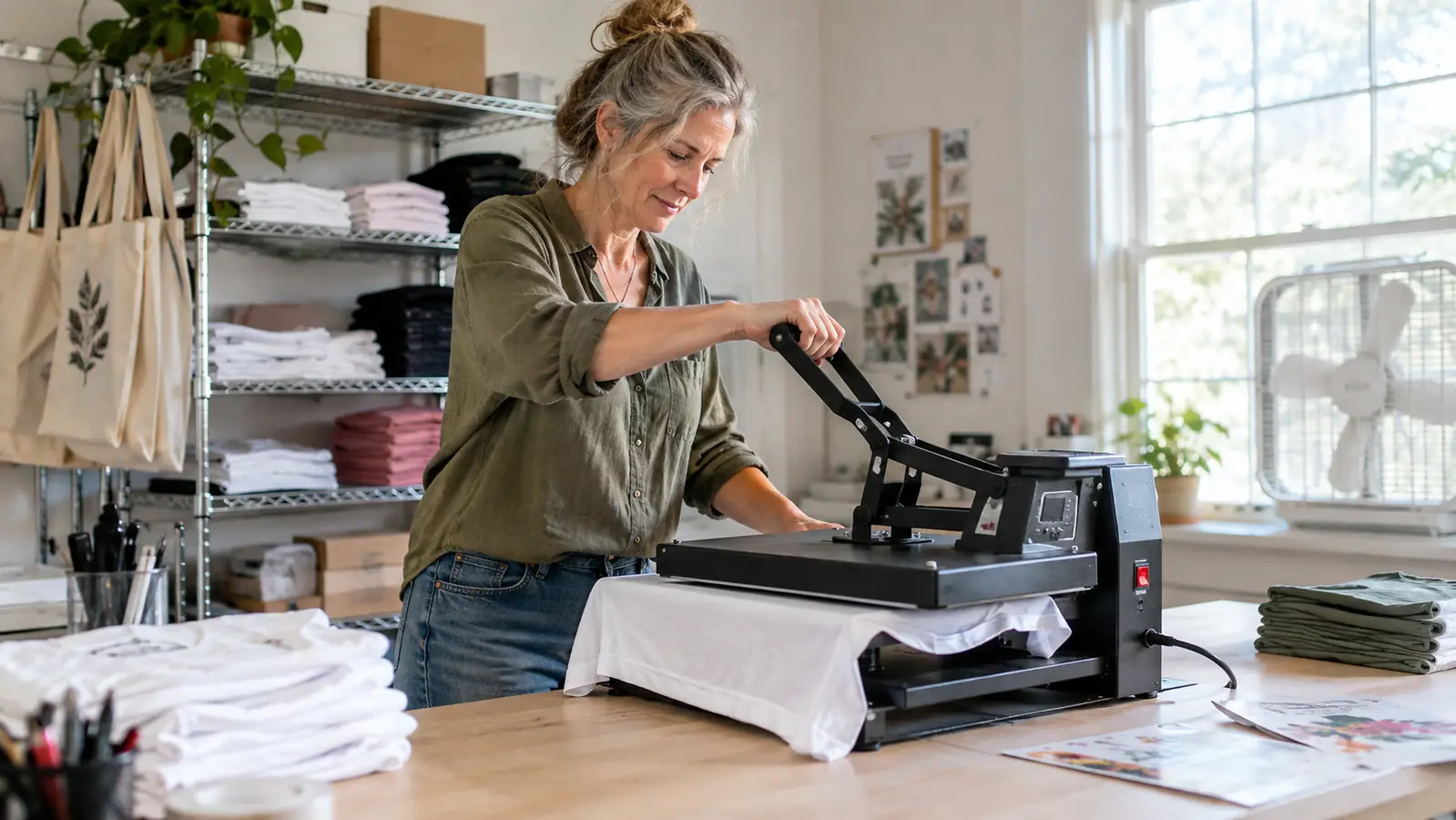
If you are starting a heat press side hustle from a spare bedroom, you have probably stared at the Fancierstudio 15x15 the way I did: it is the press everyone recommends to beginners, it has thousands of reviews, and you are not entirely sure it is not too good to be true. I am Darla Kensington, and I have been running this exact press in my craft room in Lincoln, Nebraska for about three years. I started pressing shirts for my grandson Caleb's youth baseball team, and somewhere along the way the church group and the school spirit day orders started showing up. This is what the Fancierstudio 15x15 is actually like after three years of weekend pressing, including the parts the product page does not mention.
I am not a professional printer and I never pretend to be one. I am a former school cafeteria manager who wanted custom shirts without paying a shop to do it, and I have made every mistake in the book: scorched blanks, ghosted tumblers, a design that peeled off before the first wash. If you are the same kind of person, this review is for you.
The Quick Verdict
The Fancierstudio 15x15 is the right first press for a home crafter: it heats evenly, holds temperature, and has survived three years of weekend use. It is not a commercial machine, and the pressure knob takes some getting used to, but for shirts, totes and small orders it is hard to beat at this price.
Amazon Check Today's Price →The press I still reach for every weekend
After three years of pressing shirts, totes and the occasional mug, the Fancierstudio 15x15 is still the machine on my table. If you are ready to stop paying a shop for custom shirts, this is the press to start with.
Amazon Check Today's Price on Amazon →How I've Used It
My Fancierstudio 15x15 lives on a long folding table in the spare bedroom I turned into a craft room. It is heavy enough that I do not move it around; I cleared a corner, set it up once, and it has stayed there through about three years of weekend pressing. My typical session is three or four hours on a Saturday: a dozen shirts for a church group, a few tote bags for a family reunion, and sometimes a tumbler or two if I am feeling brave.
The press heats up in about eight minutes from a cold start, which is longer than I expected but fine because I use that time to prep blanks. For vinyl on cotton shirts I press at about 300 degrees for 12 to 15 seconds with medium pressure. The digital controller holds the temperature steady, and the beeper tells me when the timer is done, which matters when you are also watching a pot of coffee and a grandson who wants a snack.
My routine on a pressing night goes like this. I switch the press on before I do anything else, then I fold the shirts I am about to press and lay them in a stack on the end of the table. By the time I have my vinyl weeded and my heat tape cut into short strips, the display has climbed to temperature. I pre-press every shirt for about five seconds to drive out moisture and flatten the wrinkles from the bag, and I can actually see a little steam come off a cotton tee on a humid August evening. That five seconds is the cheapest insurance I know of. The nights I skipped it were the nights a design lifted at the edge after the first wash.
I have used it for heat transfer vinyl on cotton tees, sublimation on polyester shirts and tote bags, and a few mugs on my small separate mug press. The 15x15 platen handles adult shirts easily, and I have pressed youth sizes without any trouble. The one thing I do not do is leave it unattended. It is a real heat press, and I treat it like one.
The order that taught me the most was fourteen shirts for Caleb's baseball team the first spring I had the Fancierstudio 15x15. Every shirt got a team name on the front and a number on the back, which meant twenty-eight presses in one evening, plus the pre-presses. I set the temperature, set the timer, and worked straight through. By the last shirt the numbers were landing just as crisp as the first, and Ron counted them twice before he would believe I had not ruined a single one. On my old iron that same order would have taken a whole weekend and at least a couple of do-overs.
What the Fancierstudio 15x15 Gets Right
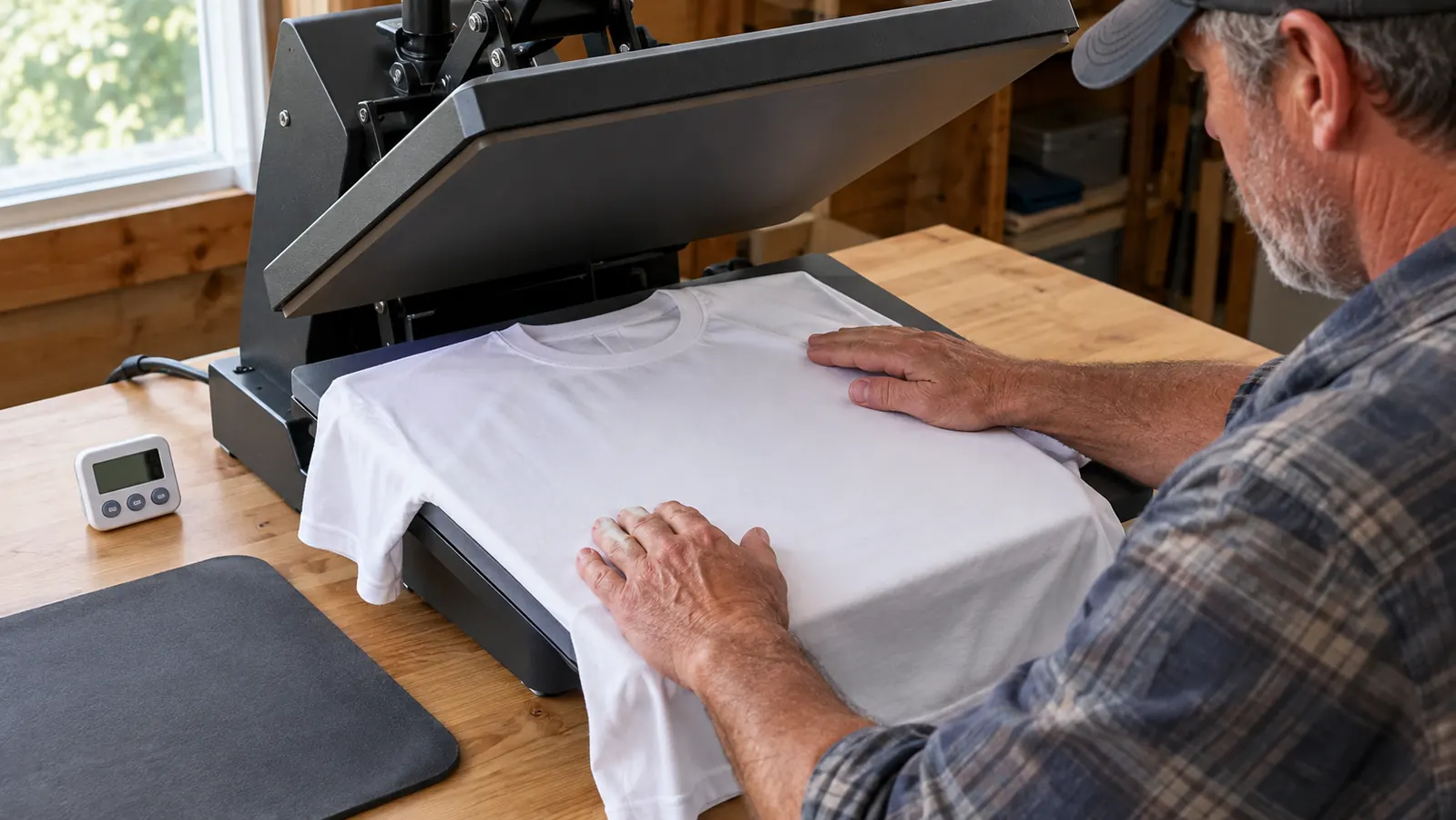
The first thing I noticed was the even heat. My early presses, before I bought this machine, had hot spots that scorched the edges of a design while the middle stayed underdone. The Fancierstudio 15x15 has a digital controller that keeps the platen within a few degrees of where I set it, and I have not had a scorched shirt since I learned to use medium pressure and a Teflon sheet.
The 15x15 platen is the other big win. It fits an adult shirt flat, which means I do not have to reposition the design or press in sections. For a beginner, that is the difference between a clean press and a crooked one. I have pressed tote bags, aprons and even a few pillowcases, and the platen size has never been the limiting factor.
It also fits more than shirts. I have pressed canvas tote bags for the church craft table, a stack of kitchen towels for a family reunion, and a set of small pennants for school spirit day. Anything flat that fits under fifteen inches by fifteen inches goes on the platen without folding, and that covers almost everything a home crafter sells a few of at a time. Youth sizes are easy, adult large and extra large are easy, and the only thing I fold is a 3XL, where I simply press the front in two passes with a Teflon sheet between them.
The build quality surprised me. The frame is solid, the handle locks down with a satisfying click, and the hinge moves smoothly. After three years of weekend use, the heating element still comes up to temperature in the same time it did on day one. I have read reviews from people who have had theirs for years, and I believe them.
What Nobody Tells You Before You Buy
The pressure knob is the thing that trips up most beginners, and it tripped me up too. The Fancierstudio 15x15 has a knob on top that you turn to adjust how hard the platen presses down. If you set it too loose, your design will not transfer fully. If you set it too tight, you can press a crease into the shirt. There is no gauge, so you learn by feel. My rule of thumb: turn the knob until the handle closes with a firm click, then give it one more quarter turn. That works for most shirts.
Here is the method that finally made it click for me. Close the press on the shirt you are about to use, then turn the knob until the handle takes a firm push to lock but does not need your whole body weight. If you have to lean on it, back the knob off a quarter turn. If it snaps shut with no resistance at all, tighten it a quarter turn. I wrote the number of turns on a strip of tape on the side of the machine for tees and a different number for tote bags, which are thicker, and I have not had to guess since.
The other thing nobody tells you is that the press will happily sit at full heat for as long as you leave it on, so it is on you to switch it off when you walk away. That is a safety feature, and I am glad it is there, but it means you have to remember to turn it back on and wait for it to reheat. I learned that the hard way when I walked away to answer the phone and came back to a cold press and a half-finished order.
The Fancierstudio 15x15 is also not a commercial machine. It is built for a home crafter doing a few orders at a time, not a shop pressing all day. The platen is not as thick as a professional press, and the handle is not as smooth as a pneumatic model. If you are planning to press hundreds of shirts a day, this is not the machine for you. If you are pressing a dozen at a time on a Saturday, it is plenty.
The pressure knob is the thing that trips up most beginners, and it tripped me up too. There is no gauge, so you learn by feel.
How It Holds Up Over Time
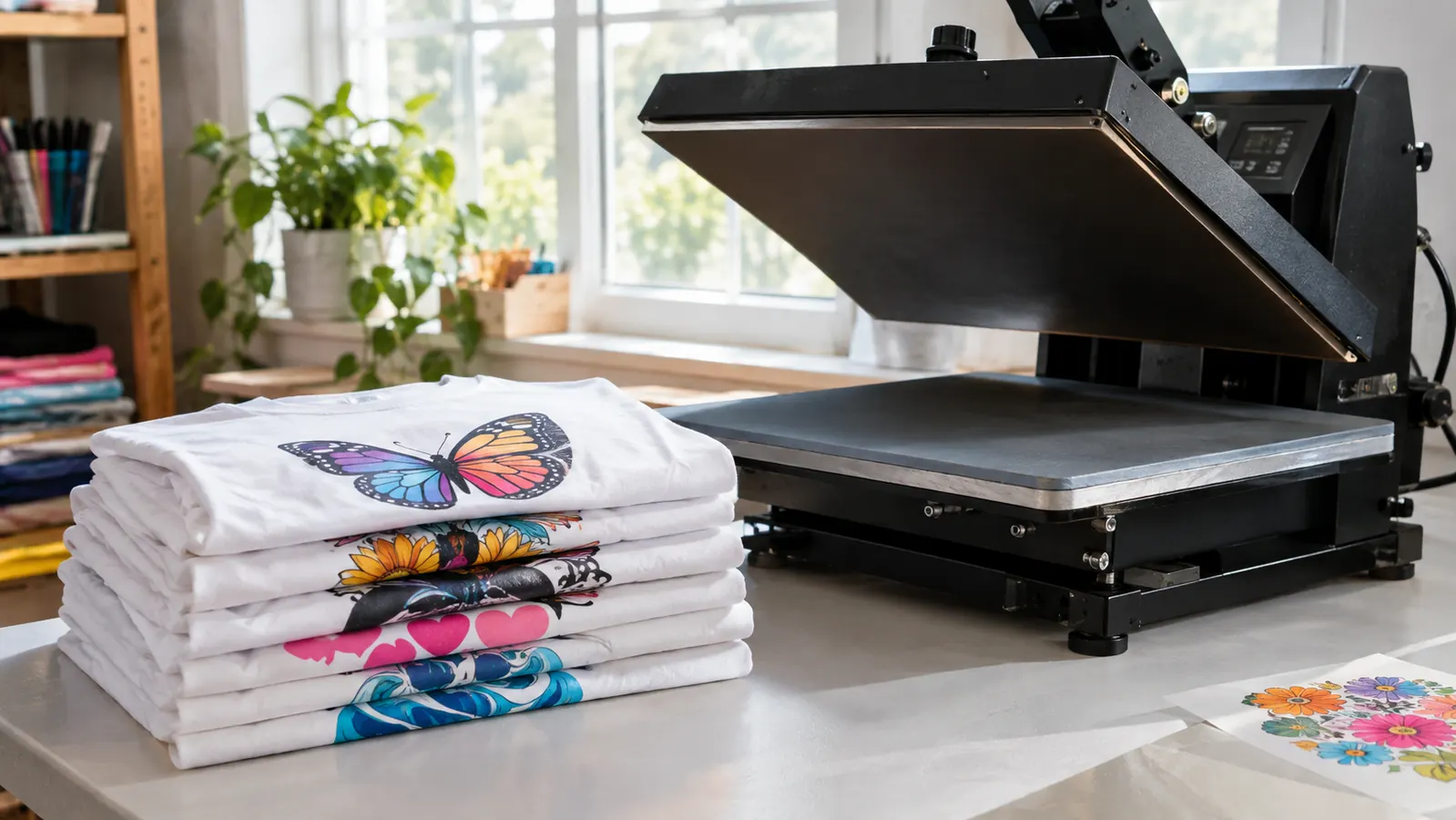
I have had my Fancierstudio 15x15 for about three years, and I have pressed hundreds of shirts, tote bags and other blanks on it. The heating element still works, the digital controller still holds temperature, and the handle still locks down cleanly. I have not had to replace any parts, and I have not had a single safety issue.
The digital display has held up well. The temperature reading still matches what I get from a cheap infrared thermometer I bought to check it, within a few degrees on the low side, and the timer beeps loud enough to hear from across the room with the box fan running. The hinge feels the same as it did on day one. I wipe the upper platen with a soft cloth once it has cooled after every session, and I have never had vinyl stick to it, mostly because I always press with a Teflon sheet or parchment over the design.
The one thing I have noticed is that the Teflon sheet on the lower platen gets worn after a lot of use. That is normal, and replacement sheets are inexpensive. I also replaced the original power cord with a heavier one because I was running it on the same circuit as a space heater, which was my mistake, not the machine's. The press itself has been rock solid.
What I would change after all this time is small. The cord is on the short side, so I keep the press on the end of the table nearest the outlet instead of running an extension cord across the floor. The machine is also heavy, somewhere around forty pounds, so it is not something you want to carry back and forth to a craft fair. Mine stays put on the folding table and the shirts come to it. If you need a press you can pack in the car every weekend, that weight is worth thinking about before you buy.
If you are the kind of person who wants a machine that will last for years of weekend use, the Fancierstudio 15x15 is a good bet. If you are the kind of person who wants a machine that will survive a commercial shop, you should look at a heavier press. For my spare bedroom operation, it has been exactly what I needed.
Who This Is For
The Fancierstudio 15x15 is for the home crafter who wants to make custom shirts without paying a shop to do it. It is for the person who is starting a side hustle out of a spare bedroom, the person who wants to press shirts for a youth baseball team, the person who wants to make gifts for family reunions and church groups. It is for the beginner who wants a real heat press, not a toy, and who is willing to learn the pressure knob by feel.
It is also a good fit if you are buying your first real press after months on a household iron. The jump in consistency is the biggest change you will feel. You set the temperature once, you set the time once, and every shirt in the stack gets the same treatment. For someone filling small orders for a church group, a reunion or a school event, that sameness is what lets you hand over a dozen shirts without holding your breath.
Who Should Skip It
Skip the Fancierstudio 15x15 if you are planning to press hundreds of shirts a day, if you need a pneumatic press for production work, or if you want a machine with a pressure gauge. Skip it if you are not willing to learn the pressure knob, because that is the one thing that will frustrate you. And skip it if you are looking for a machine that does mugs and hats out of the box, because you will need a separate mug press for mugs and a different press for hats.
What I Liked
- The 15x15 platen fits an adult shirt flat without folding
- Even heat across the platen once it reaches temperature
- Digital temperature and timer are easy to read and set
- Solid frame and a hinge that still feels tight after three years
- Handles HTV, sublimation shirts, tote bags and towels
Where It Falls Short
- Takes about eight minutes to heat from cold
- The pressure knob takes some trial and error to learn
- Heavy, so it is not a press you carry to craft fairs
- Short power cord limits where it can sit on the table
- Built for home batches, not all-day commercial runs
Ready to start pressing your own shirts?
The Fancierstudio 15x15 has been on my table for three years, and it is still the press I reach for every weekend. If you are ready to stop paying a shop for custom shirts, this is the one to start with.
Amazon Check Today's Price on Amazon →