I will be honest with you. When I first ordered EQUTY BAYMERS heat tape, I did not expect it to become the one supply I have never once run out of, three years later. I bought them back when I was pressing shirts for my grandson Caleb's youth baseball team, before I knew what I was doing, before I had scorched a good shirt or ghosted a tumbler. I figured heat tape was heat tape. You stick it down, you press, you peel it off. I was wrong about a lot of things in those early months, but I was right about this: a good roll of heat tape makes the difference between a transfer that stays put and one that slides the second you close the press.
This is the long-term review I wish someone had handed me when I was standing in my spare bedroom with a brand new heat press and a stack of blanks. I have used this tape on cotton tees, polyester blends, tumblers, mugs, tote bags, and more than a few things that probably were not meant to be pressed. I have made every mistake you can make with it, and I have learned what it will and will not do.
The Quick Verdict
If you press shirts or sublimation blanks more than once a month, this is the tape to keep on the shelf. It holds through a full press cycle, peels clean, and one roll lasts far longer than you expect.
Amazon Check Today's Price →The tape I still reach for after three years of pressing
EQUTY BAYMERS heat tape has been on my table through three years of shirts, tumblers, mugs, and tote bags in my spare bedroom craft room. If you are tired of transfers sliding or tape that leaves a sticky mess, this is the roll to try first.
Amazon Check Today's Price on Amazon →How I've Used It
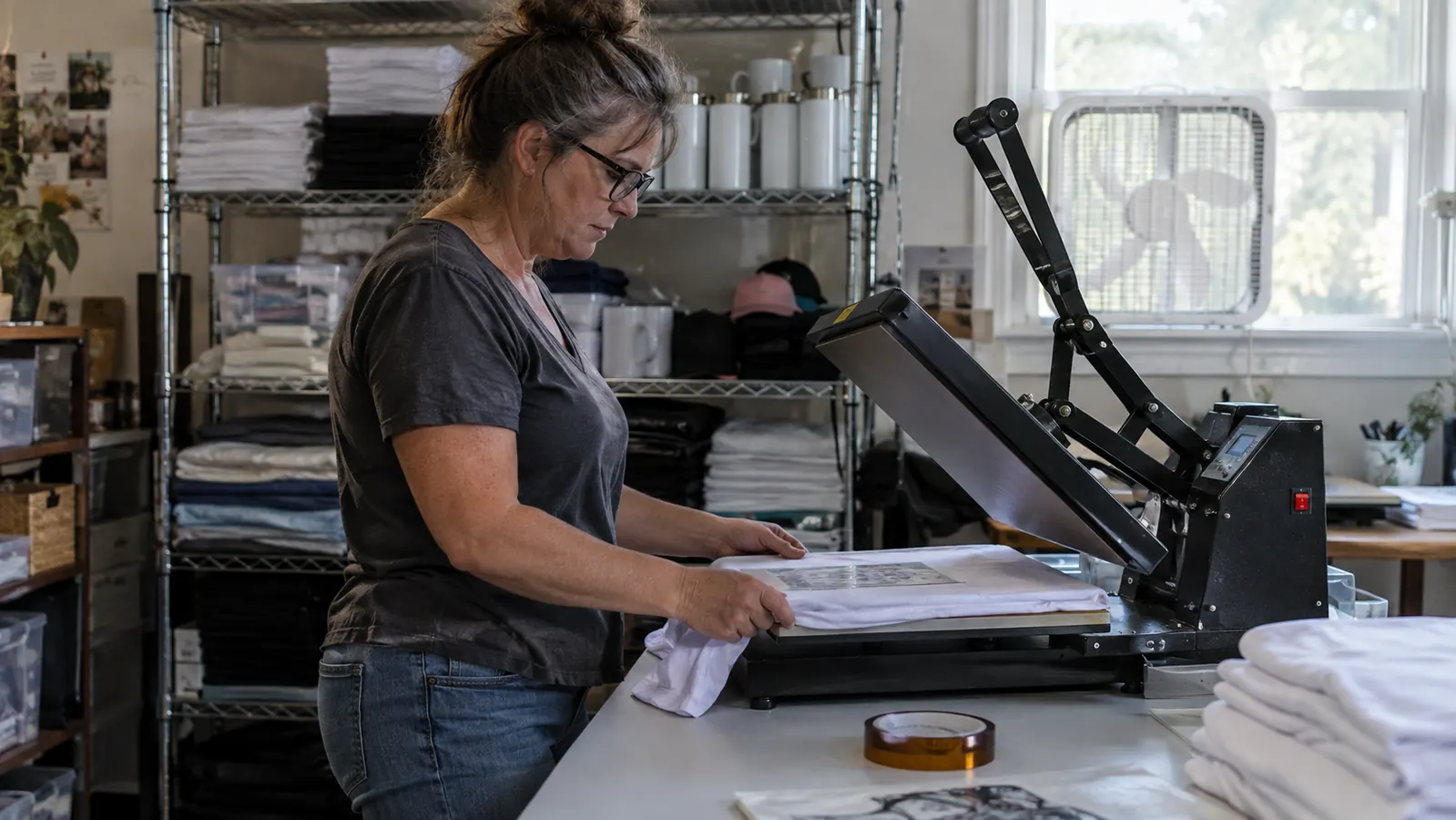
My setup is simple. I work in the spare bedroom I turned into a craft room, with a long folding table, a wire shelf of blanks, and a box fan in the window. I press shirts for church groups, family reunions, school spirit days, and the fall craft fair. Small orders, a few at a time. I am not a pro printer and I never pretend to be one.
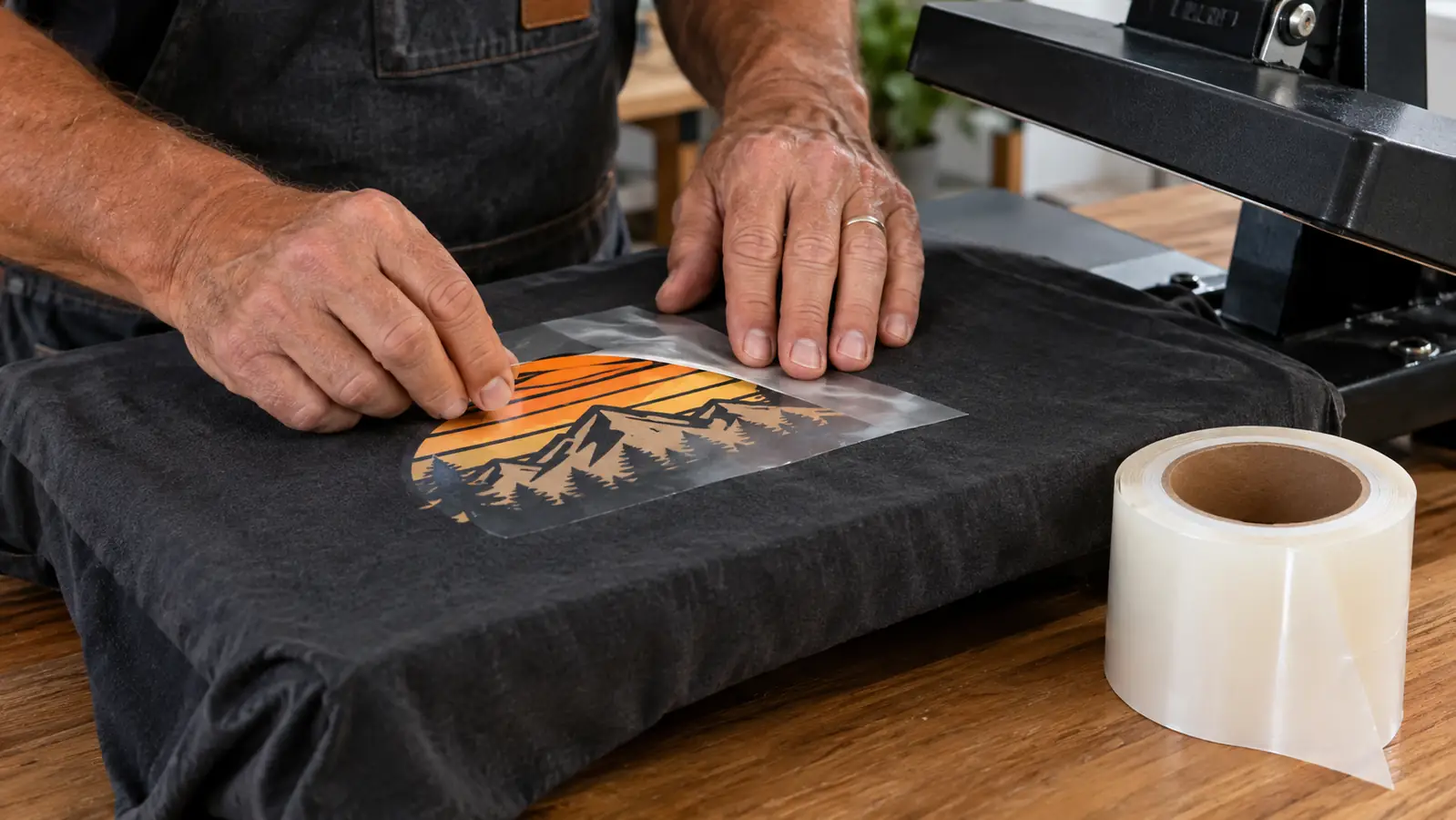
Here is how the tape actually fits into that routine. When I lay out a design on a shirt, I tape the top edge first, then the bottom, then the sides if the design is big enough to need them. I press at the temperature my vinyl calls for, usually around 315 degrees for the shirts I use most, and I leave the tape on through the whole press cycle. Then I peel it while the shirt is still warm. That is the whole job, and the tape has to do it without shifting, without melting into the vinyl, and without leaving a trace of itself behind.
On a typical order I use two short strips per shirt, one on each side of the design, and four on a tumbler wrap, top and bottom on both ends of the paper. A dozen shirts for a family reunion takes about twenty-four strips, each roughly two inches long, which is around four feet of tape. With 108 feet on a roll, that is enough for a lot of reunions. I keep the second roll sealed in a zip bag in the drawer so the edges stay clean until I need it.
I have also used it for sublimation on tumblers and mugs. That is a different kind of pressing. The tape has to hold paper tight against a curved surface while the whole thing sits in a mug press or tumbler press, and it has to survive heat that runs higher than shirt pressing. I have had tape that bubbled, tape that curled, and tape that left a ghost of itself on the paper. EQUTY BAYMERS has done none of those things for me.
Mugs were where I first understood how much the tape matters. My first mug with plain office tape came out with a gray shadow along one side where the paper had slipped while the mug press closed. The next mug, wrapped the same way but held with this heat tape at the seam and both edges, came out sharp all the way around. It was a gift for Ron's sister's birthday, and I would have been embarrassed to hand over the first one.
What This Tape Actually Is
The listing calls it a 10mm by 33 meter roll, which works out to about 108 feet per roll, and you get two rolls in the pack. Ten millimeters is roughly three eighths of an inch, which sounds narrow until you realize that most shirt designs only need a strip along the top edge and maybe one along the bottom. I use a lot less tape than I thought I would. My first roll lasted me the better part of a year, and I press something just about every week.
Ten millimeters is a hair under half an inch, which turns out to be a very practical width. It is wide enough to grip the edge of a transfer sheet firmly and narrow enough that I can place it in the margin of a design without it touching any of the vinyl. On a child's youth small shirt, where the design sits close to the collar seam, that narrow width is the difference between the tape holding the paper and the tape sitting right on top of the letters.
The tape is a thin, clear adhesive tape made to handle heat. It is not the same as masking tape, and it is not the same as the blue painter's tape you might have in the garage. I have tried both of those when I ran out, and I will tell you plainly: they are not the same. Masking tape gets brittle in the press. Painter's tape can leave a residue that shows up on light shirts. This tape is made for the heat, and it shows.
One thing I appreciate is that the tape does not fight you when you lay it down. Some tapes curl at the edge the second you pull them off the roll. This one lays flat, which matters more than you might think when you are trying to tape a design straight on a shirt without shifting it.
How It Holds Up Over Time
The real test of a heat tape is not the first press. It is the fiftieth. I have put this tape through three years of regular use, and here is what I have noticed. The adhesive stays sticky from one end of the roll to the other. I have had rolls where the first few feet were fine and the last few feet had dried out. That has not happened with this tape.
I have pressed shirts at 300 degrees for vinyl and tumblers at close to 400 degrees for sublimation, and the tape has behaved the same way at both ends. It does not curl, it does not shrink back from the edge of the paper, and it does not go gummy. I once forgot a mug in the press for an extra minute while I answered the door, and while the mug was a little dark at the rim, the tape peeled off cleanly in one piece.
It also peels clean. I press a lot of light colored shirts, and I have never seen a residue line left behind. I have had tape that pulled the vinyl up with it when I peeled, which is a special kind of frustration when you have just spent twenty minutes weeding a design. This tape releases without pulling the transfer, as long as you peel while the shirt is still warm and peel back on itself rather than straight up.
The one thing I have noticed after long storage is that the end of the roll can pick up a little dust if you leave it loose. I keep the roll in a drawer with the end tucked under the next layer, and I have not had a problem. That is a small habit, not a flaw in the tape.
Three years in, I have never had a transfer slide on me mid-press, and I have never had a residue line show up on a light shirt.
Where It Shines and Where It Doesn't
Where this tape shines is shirt pressing. It holds a design flat through a full press cycle, it does not melt into the vinyl, and it peels clean. For sublimation on tumblers and mugs, it is very good, but it is not magic. You still have to wrap the paper tight and you still have to make sure the tape overlaps the paper edge. The tape holds what you give it. It will not fix a sloppy wrap.
The narrow width is the tradeoff. Ten millimeters is perfect for most shirt designs, but if you are pressing a large design with a lot of surface area, you will use more strips, and you will find yourself taping more edges. I have a second, wider tape I reach for on big tote bag designs. For everything else, this is the roll I grab first.
I will also say this: the tape is not meant to be reused. I have tried to reuse a strip on a second shirt when I was in a hurry, and it does not hold as well the second time. That is true of every heat tape I have tried, so I do not count it as a mark against this one. It is just how the product works.
How It Compares to What I Used Before
Before I found EQUTY BAYMERS, I used whatever tape was on the shelf at the craft store, and I paid for it in small ways. Transfers that shifted a quarter inch. Tape that left a sticky line on a shirt I had already sold. Tape that curled the second it hit the heat platen. None of those problems were dramatic. They were just death by a thousand small frustrations.
The worst of those was a roll of blue painter's tape I grabbed from Ron's workbench. It held fine at the start of the press, but at full temperature the adhesive softened and left a faint blue film on a white polyester shirt that never fully washed out. That shirt went into my practice pile, and the painter's tape went back to the garage for good.
The difference with this tape is that I stopped thinking about the tape entirely. It became the boring, reliable part of my process. That is exactly what you want from a supply like this. You want it to be so dependable that you forget it is there. I have pressed hundreds of items with this tape, and I can count on one hand the times I have had to stop and re-tape a design.
Pros and Cons
What I Liked
- Holds designs flat through a full press cycle without shifting
- Peels clean with no residue, even on light colored shirts
- Two rolls in the pack, and each roll lasts a long time
- Handles both shirt pressing and sublimation on tumblers and mugs
- Lays flat without curling at the edges
- Adhesive stays sticky from the first foot to the last
Where It Falls Short
- Narrow 10mm width means more strips on large designs
- Not meant to be reused, so you go through it faster if you press big orders
- The end of the roll can pick up dust if you leave it loose
Who This Is For
This tape is for the home crafter who presses shirts for a youth team, a church group, or a family reunion and wants the process to be boring and reliable. It is for the person who is tired of transfers sliding the second the press closes. It is for the person who has peeled up a design and found a sticky line left behind, and who never wants to do that again. If you press shirts more than once a month, or if you are starting to branch into tumblers and mugs, this is the tape to keep on your shelf.
Who Should Skip It
If you only press a shirt once or twice a year, you can probably get away with whatever tape is on the shelf at the craft store, and you will not notice the difference. If you press large designs all day long, the narrow width will slow you down, and you might want a wider tape for the big jobs. And if you are hoping for a tape you can peel off and reuse, this is not that product. No heat tape I have tried is that product.
The roll that made me stop thinking about tape entirely
After three years and hundreds of presses, EQUTY BAYMERS heat tape is still the roll I reach for first. If you are ready to stop fighting your transfers, this is the tape to try.
Amazon Check Today's Price on Amazon →