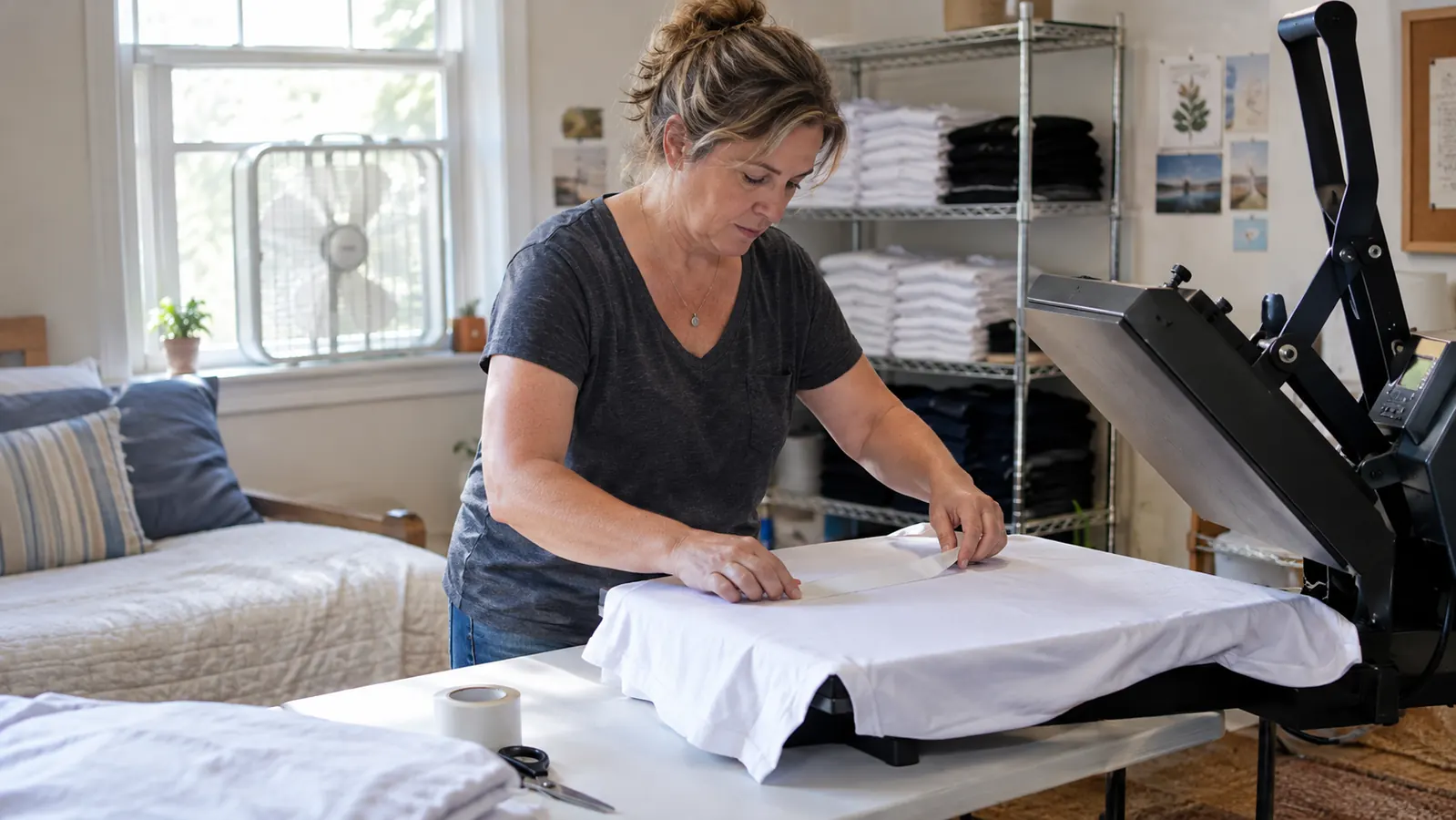
If you press shirts in a spare bedroom like I do, you have probably asked yourself the same question I asked in my first few weeks: why buy heat tape when a roll of masking tape from the garage costs a dollar? I am Darla, and I have been running a small heat press side hustle out of my craft room in Lincoln for about three years. I started with masking tape because it was what I had. Then I tried EQUTY BAYMERS heat tape, and the honest answer is that both tapes work, but they work differently. Here is the plain-spoken comparison I wish someone had given me before I wasted a Saturday afternoon peeling sticky residue off a brand new shirt.
The short answer: masking tape is fine for holding a shirt in place while you line up your design, but it is not made for the heat. EQUTY BAYMERS heat tape is made for the heat, and it shows in the little things: no residue, no scorch marks, no tape that curls up mid-press. If you press one or two shirts a month, masking tape will get you by. If you press for church groups, family reunions and the fall craft fair like I do, the heat tape pays for itself in saved blanks and saved time.
| EQUTY BAYMERS Heat Tape | Masking Tape | |
|---|---|---|
| Heat resistance | Made for heat press temps, stays flat through the full press cycle | Can curl, scorch or bake onto the shirt at press temperatures |
| Residue | Peels off clean, no sticky film left on the blank | Leaves a sticky line that needs rubbing alcohol or a wash to remove |
| Price | Costs more up front, each roll lasts me the better part of a year | Cheap and everywhere, but I used a lot of it |
| Best for | Heat press and sublimation work where the tape sits under the platen | Holding a shirt in place while you line up a design before pressing |
| Learning curve | Same motion as masking tape, just cut a strip and press it down | Everyone knows how to tear off a strip of masking tape |
Where EQUTY BAYMERS Heat Tape Wins
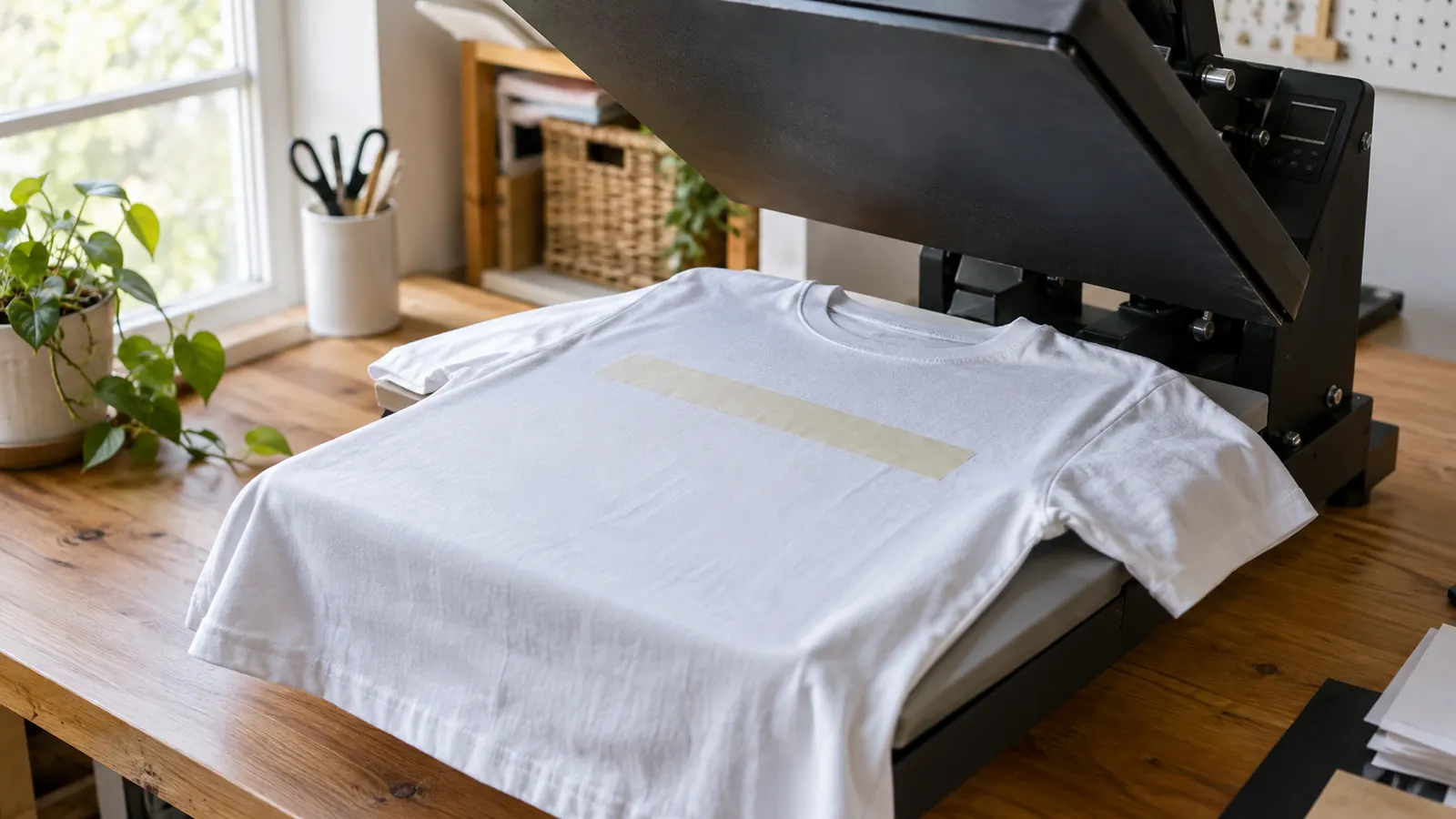
The first time I used EQUTY BAYMERS heat tape, I was pressing a batch of shirts for my grandson Caleb's baseball team. I had my design lined up, and I used the heat tape the way I always used masking tape: a strip across the top of the shirt to hold it flat. The difference showed up the second the press came down. The tape stayed flat, it did not smoke, and when I peeled the shirt off the platen, the tape came off in one clean strip. No sticky line, no little bits of paper baked into the fabric. With masking tape, I would have been picking at the shirt with my fingernail and reaching for the rubbing alcohol.
What surprised me most that first evening was how little I had to think about it. With masking tape I had always watched the press while it ran, half expecting a corner to curl up from the heat. With heat tape I set the timer, stepped back, and started weeding the next shirt. When the press opened, the transfer was exactly where I had put it, and the tape was lying flat with no scorched edges.
The other place EQUTY BAYMERS wins is the no-residue promise. The product title says no residue, and for me that has been true. I have used it on cotton tees, on polyester blends and on the smooth side of sublimation blanks. It peels off clean every time. That matters more than it sounds like it should, because a sticky line on a shirt you are about to hand to a customer is the kind of small mistake that makes you look careless. I have never had EQUTY BAYMERS leave a mark I had to explain.
Masking tape does the opposite at full heat. The paper backing browns, the adhesive softens, and when you peel it you often leave a thin sticky line on the fabric. On a dark cotton shirt you might not notice right away, but lint and dust find that line in the wash and it turns into a faint gray streak. On a white polyester shirt for sublimation, it shows up the moment you lift the tape.
Let me give you a specific day. Last October, I had twelve shirts for a church group's fall supper, and I was running behind because the order had come in late. I pressed the first three with masking tape, the way I had for years. By the third shirt, the tape had curled at the edge and left a brown line across the collar. I stopped, peeled the shirt off, and spent twenty minutes with rubbing alcohol and a soft cloth trying to lift that line out of the fabric. It faded, but it never fully went away, and I ended up redoing that shirt from a fresh blank. That was the afternoon I switched for good. The EQUTY BAYMERS roll has been on my wire shelf ever since, and I have not scrubbed a single shirt since.
I also learned that heat tape does not need to be babyed. With masking tape, I used to press the strip down hard with my thumb and still worry it would lift at the corner. The EQUTY BAYMERS tape has a firmer grip, so I just lay it across the shirt, smooth it once with the side of my hand, and it stays put through the whole cycle. I press vinyl at about 300 degrees for twelve to fifteen seconds on most cotton tees, and the tape has never curled, bubbled or smoked on me. On sublimation blanks, where I press at 400 degrees for forty-five seconds, the tape holds just as well. That longer cycle is where masking tape always let me down, because the heat had time to bake it onto the blank.
Heat tape is also simply thinner. A strip of masking tape has enough thickness to leave a slight impression when the press closes on it, especially on soft polyester. I have seen the outline of a masking tape strip pressed right into a sublimation shirt, a faint rectangle that catches the light. Heat tape is thin enough that it does not leave that mark, which is one less thing to worry about on a shirt someone is paying you for.
Skip the sticky mess and press with tape made for the heat
EQUTY BAYMERS heat tape holds your blank flat through the whole press cycle and peels off clean. Each roll lasts me the better part of a year of small orders.
Amazon Check Today's Price on Amazon →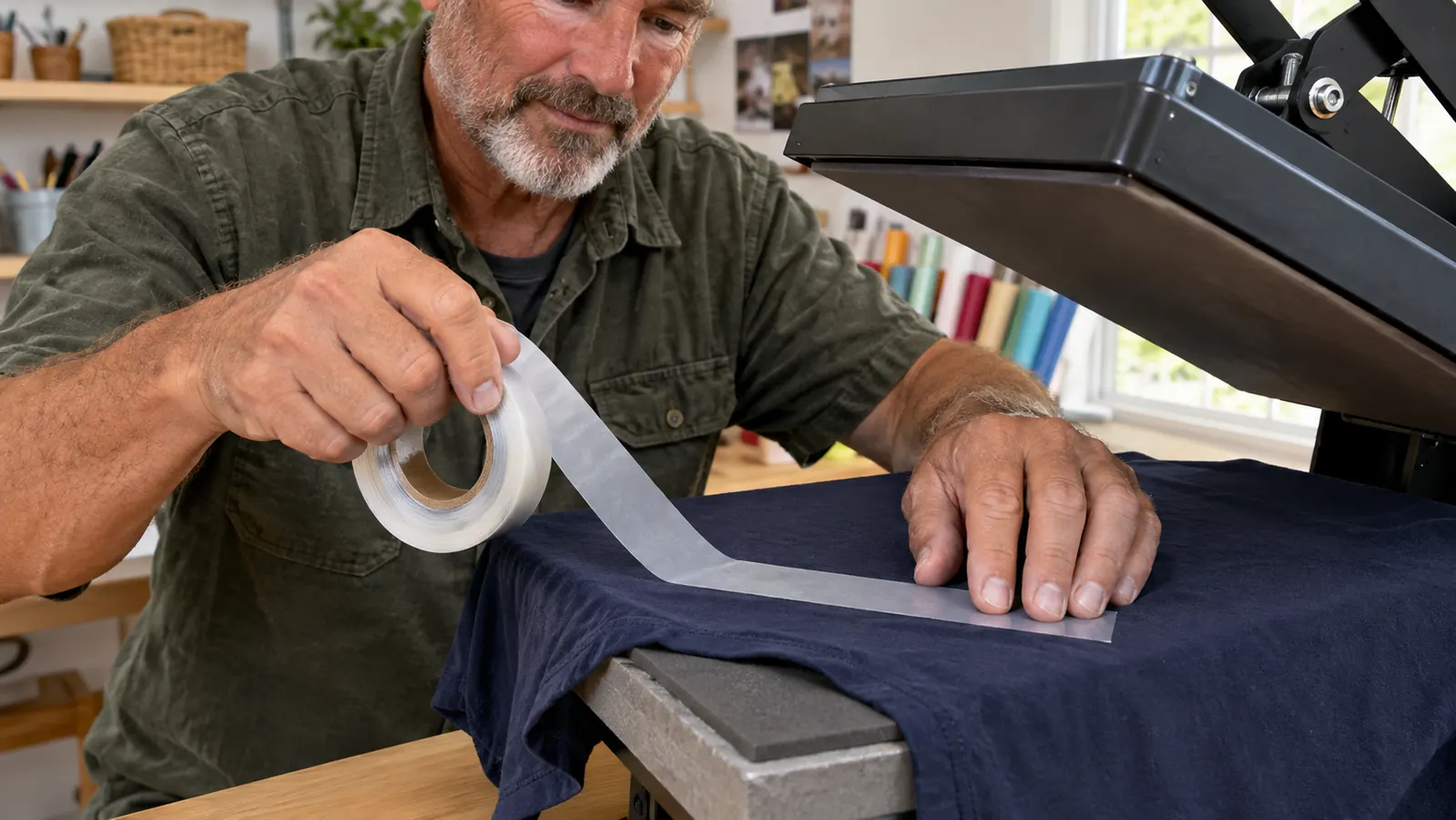
Where Masking Tape Wins
I am not going to pretend masking tape is useless, because it is not. Masking tape wins on price, and it wins on familiarity. You can buy a roll for less than the heat tape, and you already know how to use it. When I am just holding a shirt in place while I line up a design, before any heat is involved, masking tape is perfectly fine. I still keep a roll on my wire shelf for that job. It is also easier to tear by hand, which matters when you are mid-batch and do not want to hunt for scissors.
Masking tape also wins for people who press very rarely. If you are making one shirt for a birthday party and you will not touch the press again for months, buying a two-pack of heat tape is probably more than you need. The masking tape you already own will hold the shirt while you line things up, and as long as you keep it away from the heat, it will do the job. I would never tell someone to buy heat tape for a single shirt. That is not what this comparison is about.
It is also fine for anything that never goes under the press. I keep a roll of masking tape next to my cutting machine to hold the vinyl sheet steady while I trim it, and to label the edges of my blanks with sizes when I am sorting an order. For those jobs it is cheap, easy to tear, and perfectly good. The trouble only starts once it meets 300 degrees and up.
There is one more thing masking tape does well, and it surprised me. When I am layering a design with multiple colors, I use masking tape to hold the registration marks on the carrier sheet while I check the placement. The tape is easy to move, it does not grab the paper, and I can reposition it a dozen times without it losing its stick. I have tried using heat tape for that job, and it sticks too well. It pulls the paper and leaves a faint line. So my honest advice is to keep both rolls on the shelf. Masking tape for the fiddly setup work, EQUTY BAYMERS for anything that goes under the platen.
Let me be specific about the price difference, because it is the reason most people start with masking tape. A roll of masking tape costs about what you would spend on a cup of coffee, and you can grab it at the hardware store on the way home. The EQUTY BAYMERS two-pack costs more up front, and you have to order it online and wait for it to arrive. But here is what I noticed after a few months: I was replacing the masking tape roll every couple of weeks because I used so much of it, while the heat tape roll barely looked used. I cut strips about two inches long for the top of a shirt and shorter pieces for the sleeves, and a single roll of heat tape has lasted me through dozens of small orders. When I added up what I spent on masking tape over a season, the heat tape was not really more expensive at all.
Who Should Buy Which
Buy EQUTY BAYMERS heat tape if you press regularly, if you press at full temperature, or if you have ever peeled a shirt off the platen and found a brown scorch line where your masking tape used to be. That was the moment I switched for good. I press small orders a few at a time, and the heat tape has saved me more shirts than I can count. It also saves time, because I am not scrubbing residue off every single blank.
Stick with masking tape if you only press occasionally, if you only use it to hold a shirt while you line up a design, or if you are not pressing at full heat. There is no shame in that. I used masking tape for my first few weeks and made a few shirts that came out fine. The heat tape is not magic, it is just the right tool for the job. And if you are like me, someone who would rather spend the evening pressing shirts than scrubbing sticky lines off them, the heat tape is the tool that makes the job easier.
If you are somewhere in the middle, pressing a handful of shirts a month, my honest advice is to keep both. Use masking tape for layout and labeling, and switch to heat tape for anything that goes under the platen or inside a tumbler press. That way the cheap tape does the cheap jobs, and the right tape protects the blanks that matter.
The first time I used EQUTY BAYMERS heat tape, the tape came off in one clean strip. No sticky line, no little bits of paper baked into the fabric.
Press your next batch with tape that peels off clean
EQUTY BAYMERS heat tape holds flat through the press and leaves no residue. Two rolls cover a lot of small orders.
Amazon Check Today's Price on Amazon →