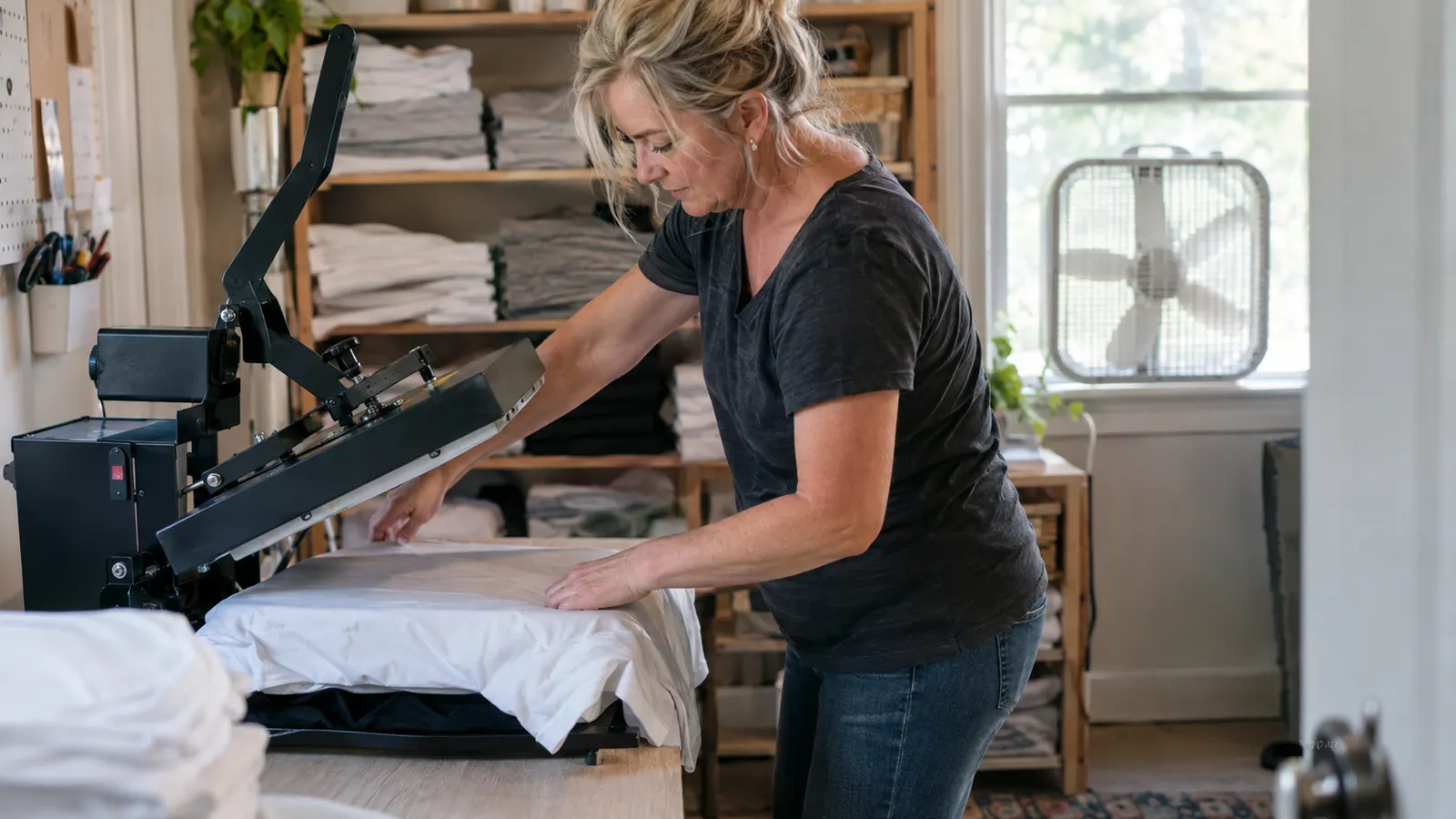
I still remember the first sheet of A-SUB sublimation paper I ever ruined. It was an April Tuesday, and I only had ten days before my grandson Caleb's youth baseball team's season opener. I had just pressed a shirt with the design facing the wrong way, and when I pulled the paper off, half the number 7 was on the fabric and the other half was on the paper. The image ghosted across the fabric like a bad photocopy, and I stood there in my spare bedroom with the box fan blowing and thought, well, that is one way to learn. Three years and a few hundred sheets later, that same ream of A-SUB paper is still what I reach for first, and I finally feel ready to write down everything I have learned about it.
I am Darla Kensington, 51, and I used to manage a school cafeteria in Lincoln until I took early retirement three years ago. I started pressing shirts for Caleb's team because the team mom was looking for somebody with a Cricut, and I had bought a used one at a garage sale a month earlier. I also picked up a secondhand 15x15 heat press that same week, and I quickly found out that pressing a shirt is a lot harder than it looks on YouTube. That spare bedroom is now my craft room. It has a long folding table, a wire shelf full of blank shirts, mugs and tumblers, and a box fan in the window that blows the hot air out. I make custom tees, tumblers, mugs and tote bags for church groups, family reunions, school spirit days and the fall craft fair. I am not a professional printer. I have never pretended to be one. But I have pressed enough shirts to know which paper I can trust not to waste my blanks.
The Quick Verdict
A-SUB sublimation paper is the most dependable paper I have used in three years of home pressing. It prints bright, transfers clean, and rarely curls, and the 125g weight is a good match for a home heat press. It is not the cheapest paper on the shelf, but it is the one I trust not to waste my blanks.
Amazon Check Today's Price →The paper I reach for first, every single time
After three years and hundreds of presses, A-SUB is still the paper I trust with my blanks. If you are tired of ghosted prints and curled sheets, this is the one to try.
Amazon Check Today's Price on Amazon →How I've Used It
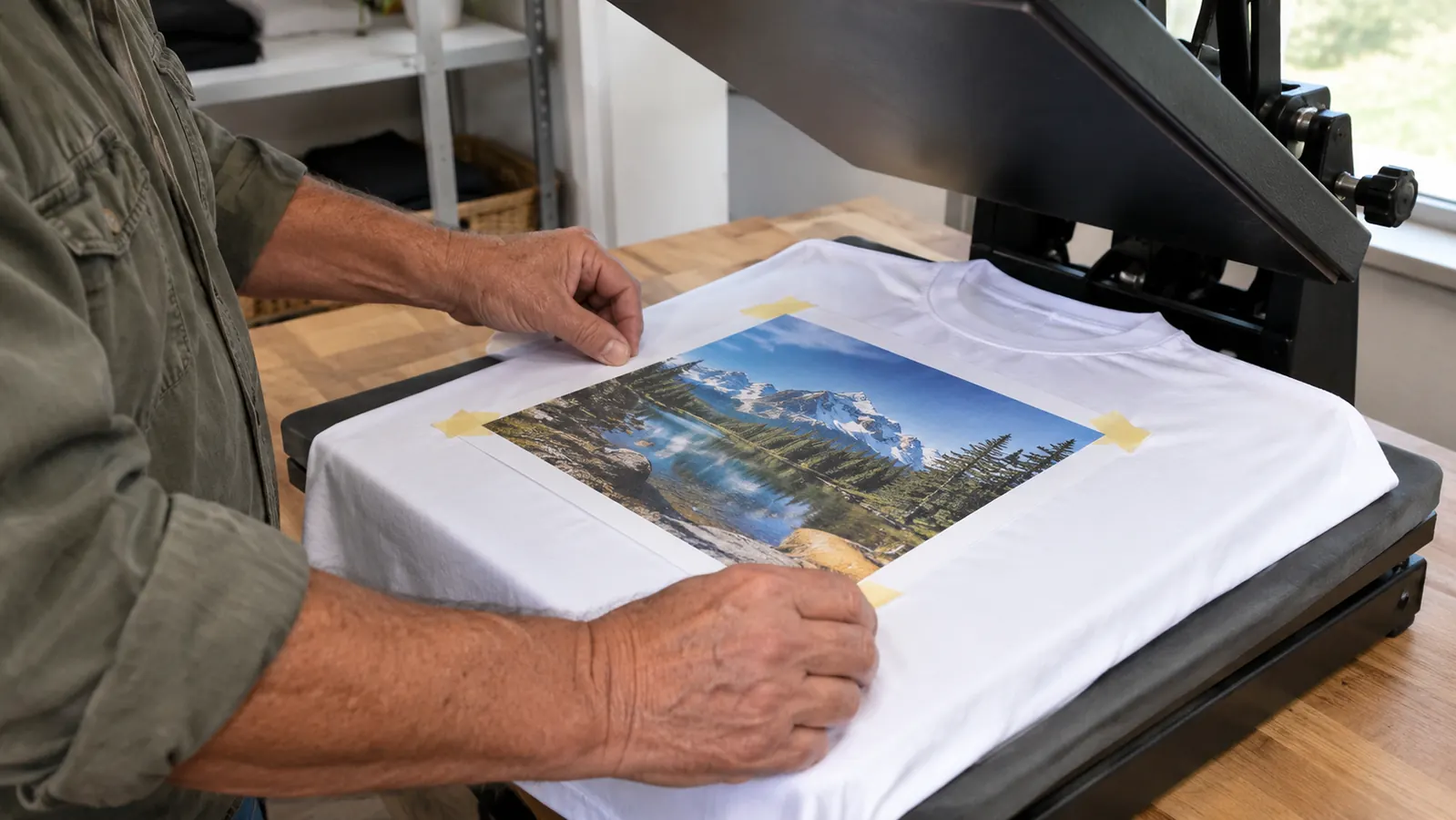
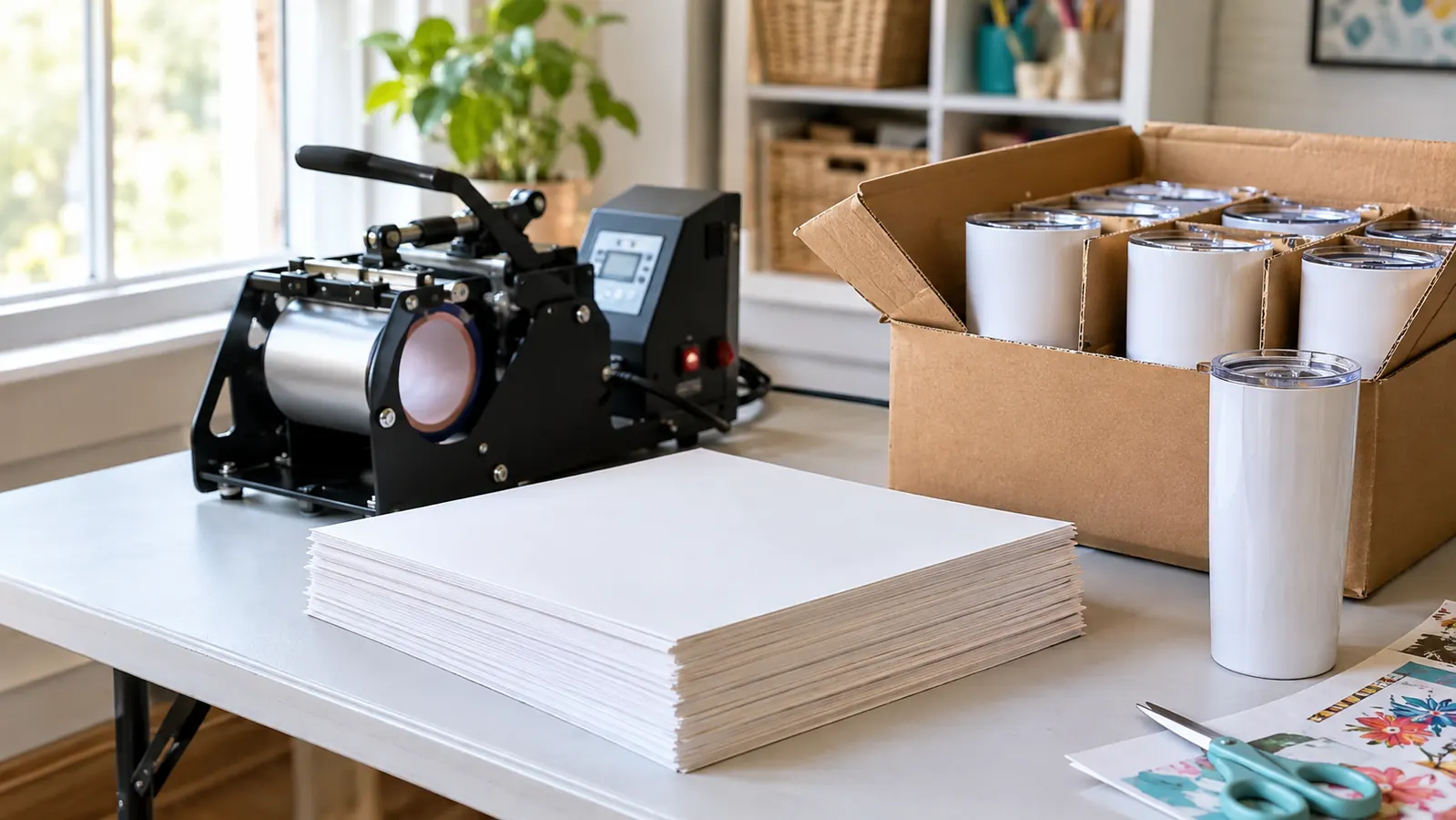
I have used A-SUB in just about every way a home crafter can. It has gone through my 15x15 clamshell press, my tumbler press and my small mug press, and it has done the job in all three. I usually press polyester tees at 400 degrees for 45 to 60 seconds, and I have also pressed ceramic mugs at 380 degrees for 90 seconds. The paper never complained about any of those settings. It just releases the ink when the heat is right and the pressure is even.
My blank selection has changed over the years, but my paper has not. I started with white cotton tees, though I learned quickly that sublimation won't work on cotton, then moved to 100% polyester shirts and poly-coated tumblers. The tumblers are the trickiest because the surface is curved. A-SUB handles the curve well if you tape it tightly, and the print wraps around the mug without a gap. For tote bags, the paper sits flat and presses evenly. That has been my experience on every blank I've tried.
The one time I pushed A-SUB to its limit was a two-day rush order for a local church's vacation Bible school. I pressed 28 shirts between Tuesday afternoon and Wednesday night. The room was hot, the press was hot, and I was running on cold coffee. The paper stayed flat, the sheets did not jam in my printer, and the transfers all came out even. I remember that week because it was the first time I understood that the paper is not the thing you worry about.
I have also used A-SUB with two different printers. I started with a converted Canon that I only use for sublimation, and now I have a dedicated Epson EcoTank set up with sublimation ink. Both printers produced identical results. The paper does not care which printer it goes through, as long as the ink is true sublimation ink. That consistency is the reason I keep buying it.
What Makes A-SUB Paper Different
The first thing I noticed was how evenly it takes ink. I print a lot of tumblers with large solid color areas, and some papers I have tried leave light streaks or patchy spots where the ink dries unevenly. A-SUB does not. I once printed a six-inch square of solid dark blue and pressed it onto a cotton canvas tote. The color was uniform from corner to corner, no streaking, no mottling. That is the coating doing its job. It holds the ink on the surface until the heat pushes it off, and it releases it all at once instead of in patches.
The second thing is the coating's stability. I can print a sheet of A-SUB, set it aside, and press it an hour later without losing quality. I have even pressed sheets the next day, and they still came out bright. I tested this on purpose one weekend: I printed two identical designs, pressed one immediately and the other after waiting a full twenty-four hours. The colors matched. That is not true of every sublimation paper on the market, and for a busy crafter it is a real advantage.
The third thing I appreciate is how it handles curl. I live in Nebraska, where the air gets bone-dry in January and sticky in July. Some budget papers I have used would curl up at the corners within an hour of coming out of the printer, and I would have to flatten them under a stack of books before pressing. A-SUB stays mostly flat no matter the season. It will wave a little on a very humid day, but a strip of heat-resistant tape at the two top corners keeps everything in place. That sounds like a small thing, but when you are pressing thirty shirts, it saves a lot of aggravation.
How It Performs Over Time
I have been using A-SUB since I gave up on the cheap paper in my first few weeks, and its performance has not changed. The ream I bought last month behaves exactly like the ream I bought when I started. That consistency is rare. I have tried budget papers that worked well for the first few sheets, then started ghosting or sticking. A-SUB has never done that. The sheets are the same thickness, the same absorbency, the same release, every time.
The prints also hold up. I wash the shirts I make for Caleb's team constantly, and the colors stay bright. The shirt I pressed for his first season opener, a white one with red letters and a number, has been through the wash at least forty times, and the letters still look sharp. I have a tote bag from two years ago with a pumpkin design on it, and it has been through the washer dozens of times. The print did not crack, did not peel, and did not fade. That is the paper doing its job, because the ink is only as good as the transfer.
One thing I have learned is that A-SUB rewards a clean press. I press at the temperatures my heat press manual recommends, and I use a light touch with the tape. When I do that, the paper releases cleanly every time. When I rush, or when I press too hot, I get a little ghosting. That is on me, not the paper. I know because when I fix my timing and press the same design with a fresh sheet, it comes out perfect. The paper gives me a fair chance; it does not make up for a sloppy press.
The paper I bought last month behaves exactly like the paper I bought in my first year. That consistency is rare.
Troubleshooting With A-SUB
The most common problem I hear from people starting out is ghosting. Sometimes the paper slips during the press, or the press is too hot, or the design is too large for the platen. With A-SUB, ghosting is rare if you tape the paper down. I keep a roll of heat-resistant tape on the edge of my heat press. My rule is to tape at least two corners, and three if the design is big. When I do that, the paper holds its position and I don't see ghosts.
Another issue is paper sticking to the blank. That can happen if the ink is still damp when you press or if the coating is weak. A-SUB has never stuck for me. The paper releases cleanly as long as I wait until the print is dry. I usually let the sheet sit for ten minutes after it comes out of the printer. On humid days, I give it fifteen. That little pause is the difference between a clean transfer and a smeared one. When I press a shirt right after the ink dries, the paper comes right off without leaving residue on the blank.
If you do get a bad press, A-SUB does not make it worse. Last winter, my press blanket slipped in the middle of a run of mugs, and one mug came out with a faint mark from the blanket. I was able to turn the mug around, press it again with a fresh sheet of A-SUB and four layers of tape, and the second press was perfect. With a cheaper paper, the first bad press would have left a residue that I could not clean off. That recoverability is something I did not appreciate until I tried it.
The Pros and Cons
What I Liked
- Bright, even color transfer on every press
- Stays flat, even in dry or humid Nebraska weather
- Coating holds ink well, so I can press sheets later
- Consistent from sheet to sheet and ream to ream
- Works with any real sublimation ink setup
- Releases cleanly with no residue
Where It Falls Short
- Costs more than budget sublimation paper
- Can wave a little on very humid days
- Not the fastest-drying paper I have tried
Who This Is For
A-SUB sublimation paper is for anyone who presses shirts, tumblers, mugs or tote bags and wants the print to come out right the first time. It is for the home crafter who is tired of ghosted designs and curled sheets. It is for the person who sells at the fall craft fair and needs every piece to look good, because a bad print on a blank is money wasted, even if the blank is not expensive.
Some people worry that A-SUB is too expensive for a hobby. But I have found that the paper is the cheapest part of the whole process. A blank shirt, a mug, or a tumbler costs more than a sheet of paper. If one sheet of paper ruins the blank, you have wasted the blank and your time. With A-SUB, I can count on the paper, which means I can count on my finished product. That is worth the difference in price to me.
Last spring, a neighbor asked me to make fifteen tumblers for her daughter's graduation party. I pressed all fifteen in one afternoon, and every single one came out clean. With a cheaper paper, I would have had at least one dud, and I would have had to buy a new tumbler and re-press. The paper is the cheapest insurance I own.
Who Should Skip It
If you only press a shirt or two a year for your own family, A-SUB might be more than you need. I used a budget paper for my first few weeks, and the prints were a little dull and the sheets curled, but the shirts were still wearable. If you are not bothered by those issues, A-SUB is a nice upgrade but not a must-have. You can save a few dollars and still get decent results.
And if you are using regular inkjet ink instead of sublimation ink, no paper will help you. A-SUB will not turn a regular inkjet setup into a sublimation setup. The paper only works if your printer and your ink are designed for sublimation. Before you buy any paper, check your ink. If the wrong ink is in the printer, the paper won't transfer anything. A-SUB is not magic; it is just a very good paper.
The paper that has never let me down
If you are ready to stop wasting blanks and start getting bright, clean transfers, A-SUB is the paper I trust with every shirt, tumbler and tote. See the current price on Amazon and give it a try.
Amazon Check Today's Price on Amazon →