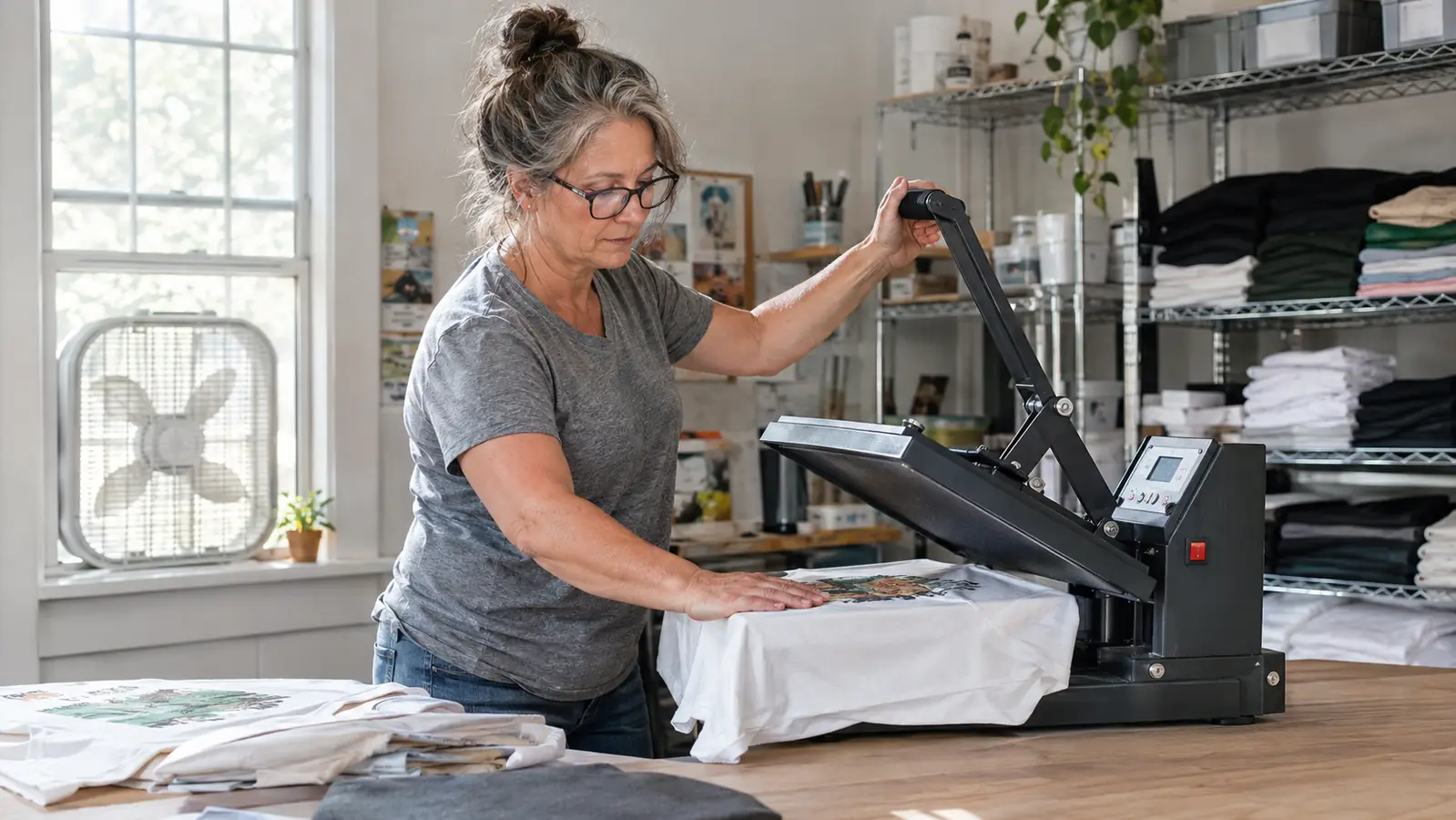
When I started pressing shirts for my grandson Caleb's baseball team, I did not own a heat press. I borrowed a friend's small one, scorched two shirts, and still got hooked. Three years later I run a little side hustle out of my spare bedroom, and the machine that has done almost all of that work is the Fancierstudio 15x15. If you are trying to decide whether a 15x15 is the right size for a beginner, here are the ten reasons I would tell a friend to go with it.
A 15x15 that grows with you
The Fancierstudio 15x15 is the size I started with and the one I still reach for. It handles adult shirts, tote bags, and most tumblers without making you upgrade later.
Amazon Check Today's Price on Amazon →It fits adult shirts without folding or fussing
A 15x15 platen covers a full adult shirt front in one press. That matters more than you think when you are new. With a smaller press you line up the design, press the middle, then try to press the edges without leaving a line. The Fancierstudio 15x15 lets me lay a shirt flat, close the platen, and be done. Fewer steps means fewer mistakes, and fewer mistakes means less wasted money on blanks. The first time I pressed a large shirt for my husband Ron, I did not have to shift the shirt at all. I just centered the design, pulled the handle, and it came out clean on the first try.
One machine covers shirts, totes, and tumblers
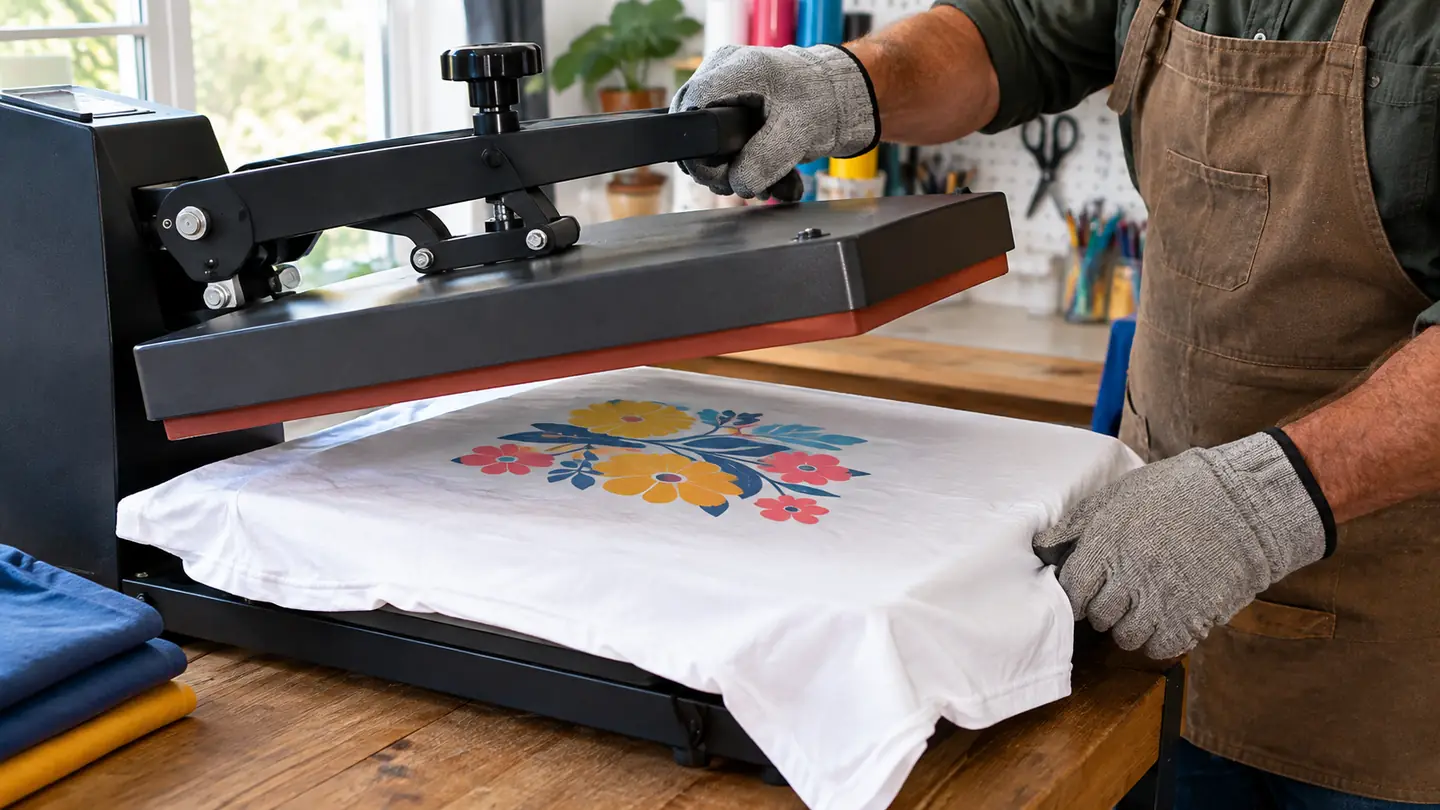
I started with shirts, then a church group asked for tote bags, then someone wanted a tumbler. The 15x15 handled all of it. The platen is big enough for a tote front, and the machine gets hot enough for the sublimation mugs and tumblers I press on the side. You do not need a separate press for every project when you are starting out. That is how a hobby stays affordable. Last fall I pressed forty totes for a church fundraiser in one weekend, and the only thing I changed between shirts and totes was the time and temperature setting.
The digital controls are easy to read and set
The Fancierstudio 15x15 has a digital display for temperature and time. You set the number, wait for the beep, and press. I am not handy with gadgets, and I figured this out in an afternoon. For a beginner, that is the whole ballgame. You want a machine that does not make you guess. I keep a little notebook on the shelf with the settings I use most, and the display is big enough that I can read it without my reading glasses.
Even heat across the platen means fewer do-overs
Nothing ruins a shirt like a cold corner. The 15x15 heats evenly across the whole platen, so the design cures the same in the middle as it does at the edge. I learned this the hard way with a borrowed press that left half a design shiny and half dull. With the Fancierstudio, I press once and move on. I tested it early on with a plain white shirt and a piece of transfer paper, and the color came out the same from corner to corner. That is the kind of consistency a beginner needs.
It is forgiving while you learn
You will make mistakes. I scorched a shirt my first week because I left it down too long. The good news is the 15x15 is consistent, so when something goes wrong, you know it was your timing, not the machine. That makes learning faster. You adjust your time, try again, and the next shirt comes out right. I remember the exact afternoon I figured out my timing: I pressed three shirts in a row, and all three came out the same. That was the day I stopped second-guessing myself.
It fits on a folding table in a spare bedroom
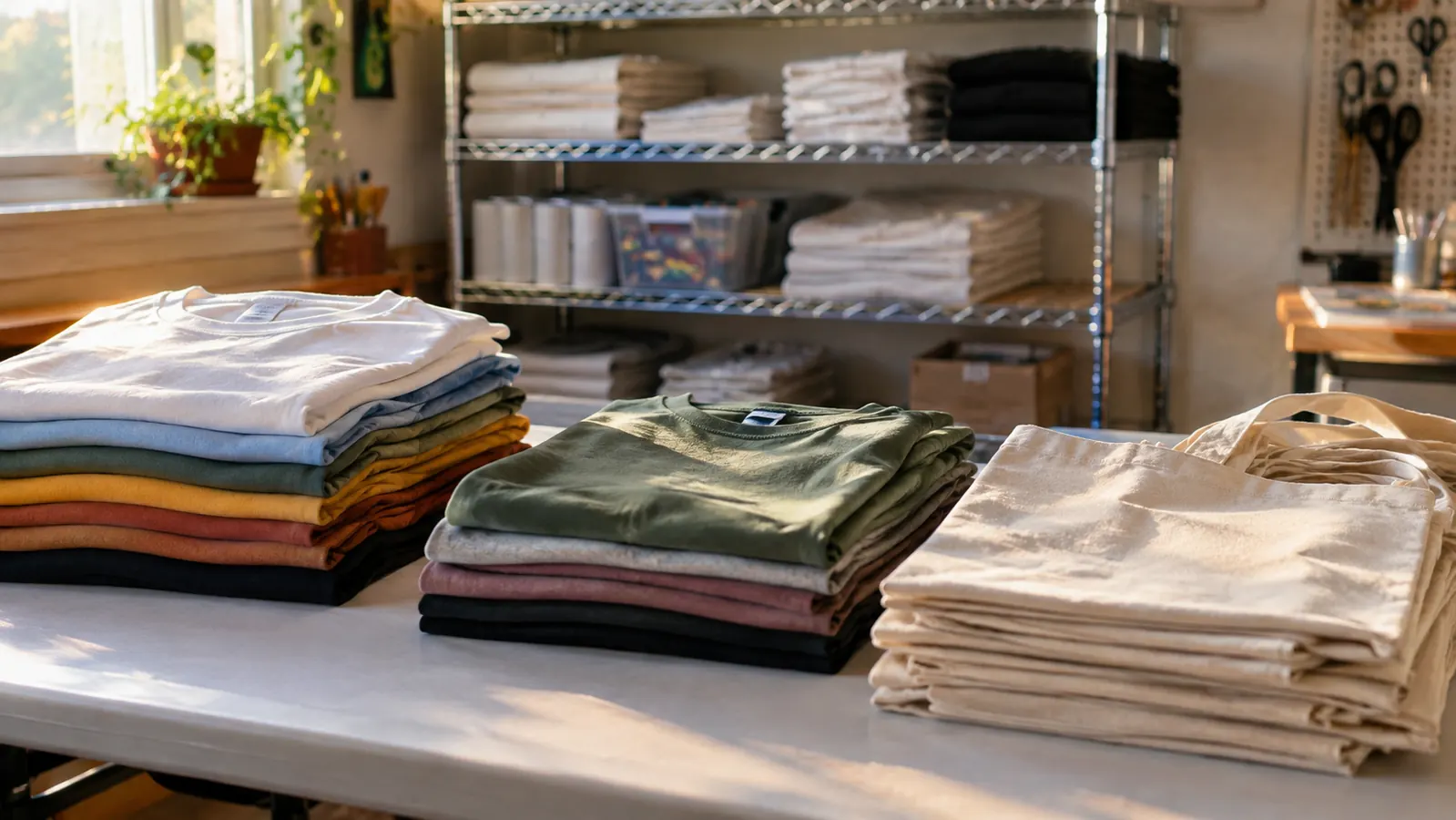
My craft room is a spare bedroom with a long folding table and a wire shelf of blanks. The 15x15 sits on the table without taking over the room. It is not a tiny machine, but it is not a floor model either. If you are working in a corner of your home, this size is the sweet spot. I measured the table before I ordered it, and the press fit with room to spare for my stack of blanks and a box of transfer paper.
It handles small orders without slowing you down
My orders are small: a dozen shirts for a family reunion, a few totes for a church group. The 15x15 keeps up easily. The platen cools and reheats fast, so I can move from one shirt to the next without waiting around. For a beginner taking small orders, that pace is plenty. The week before the fall craft fair, I pressed twenty-two shirts in one evening and still had time to clean up the table before bed.
It is built to last through the learning curve
I have pressed hundreds of shirts on my Fancierstudio 15x15 and it still heats up the same as the day I got it. The build feels solid, the handle is sturdy, and the platen stays true. You are not buying a toy. You are buying a machine that will still be working after you have learned what you are doing. Mine has been through three years of weekend use and more craft-fair orders than I can count.
It leaves room to grow into bigger projects
A 15x15 is not the biggest press out there, but it is big enough that you will not outgrow it in six months. I can press adult hoodies, large totes, and even some home decor pieces. When a customer asks for something a little bigger, I can usually say yes. That is a good feeling when you are starting out. Last spring I pressed a set of kitchen towels for a friend, and the platen handled them just fine.
It is the size most tutorials and patterns assume
When I was learning, almost every tutorial I found assumed a 15x15 press. Temperature charts, time settings, placement guides, they all use that size. That means less translating and more doing. For a beginner, following along with the same machine everyone else is using is a quiet advantage. I still have a printed temperature chart taped to the inside of my cabinet, and it has never let me down.
What I'd Skip
If you only ever plan to press baby onesies and small kids' shirts, a 15x15 is more machine than you need. A smaller press will do that job and take up less space. And if you are hoping to press giant hoodies or full back prints on extra large shirts, you will eventually want a bigger platen. The 15x15 is a wonderful beginner size, but it is not the answer to every job. I would also say skip it if you are not sure you will use it more than once or twice a year. A press this size earns its place when it gets regular use.
I scorched a shirt my first week because I left it down too long. The 15x15 is consistent, so when something goes wrong, you know it was your timing, not the machine.
Start with the size that will still be working in year three
The Fancierstudio 15x15 is the press I learned on and the one I still use every week. If you are starting out, this is the size I would buy again.
Amazon Check Today's Price on Amazon →