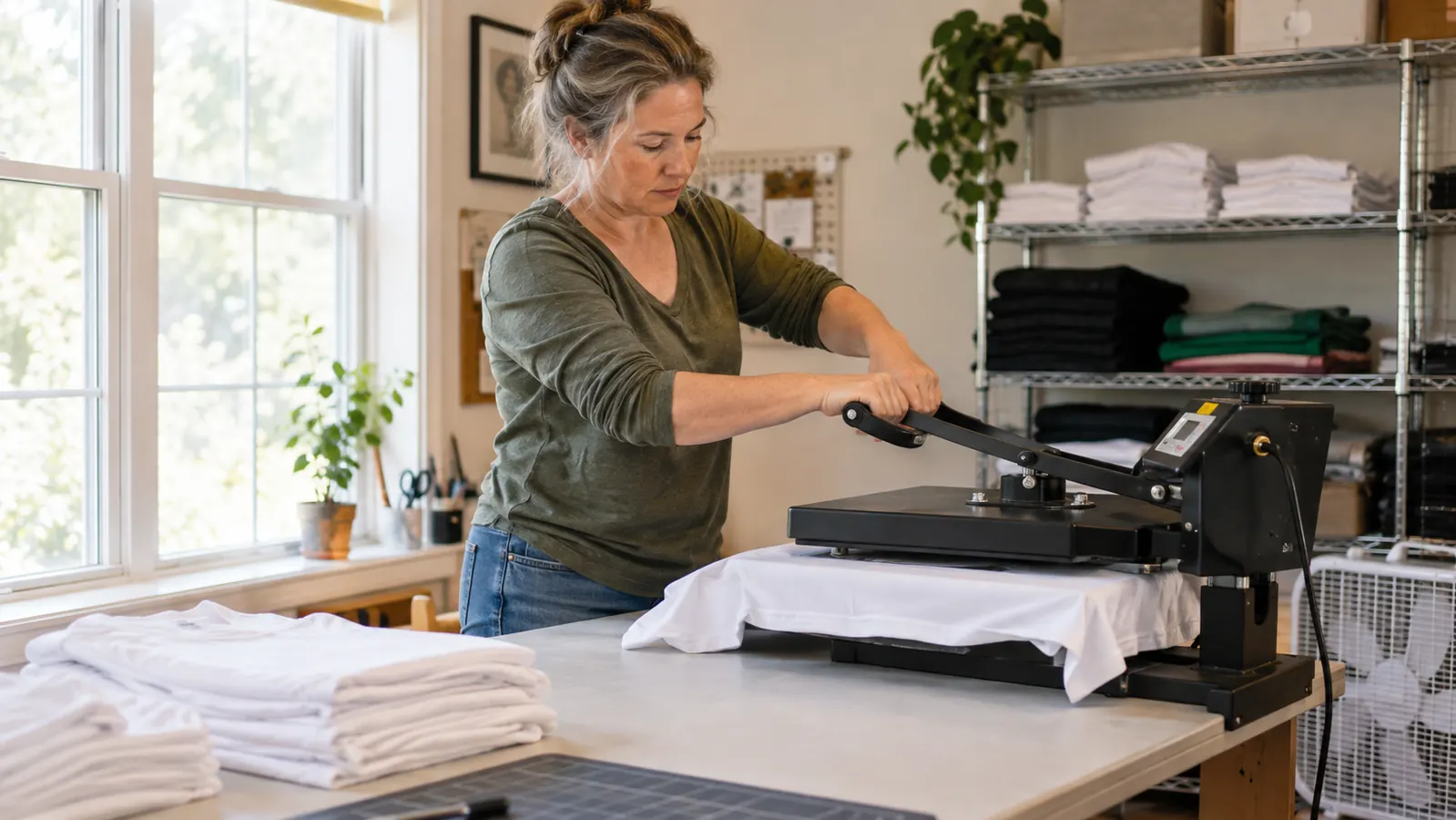
The question I get most from people just getting into pressing shirts is which machine to buy: a clamshell like my Fancierstudio 15x15, or a swing-away. I remember sitting with the same choice myself about three years ago, coffee gone cold, reading reviews at midnight, trying to decide whether the extra money for a swing-away was worth it. Back then I did not know anybody who pressed shirts, so I went back and forth for two weeks before I finally ordered. Here is what I wish somebody had told me: the shirts come out about the same. The real difference is in how you load them, how much room the press needs, and how your arms feel after a long afternoon at the folding table.
If you press mostly flat blanks, tees, totes, bandanas, and you want a simple first setup that does not empty your wallet, the Fancierstudio 15x15 is the honest pick. If you press all day, sell at shows most weekends, or do a lot of hoodies and bulky items, a swing-away earns its higher price. For my spare bedroom, one shirt at a time, the clamshell has been more than enough. I have pressed hundreds of shirts on it, and I would make the same choice again today.
The Short Version
Both presses do the same basic job. You set a temperature, you set a timer, you place a blank shirt on the lower platen, and you bring the heated upper platen down on it. The difference is how the top platen moves. A clamshell, which is what the Fancierstudio 15x15 is, lifts straight up and lowers straight down, like a clam opening. A swing-away pivots to the side, so the whole upper platen swings clear of the table, like a car door opening.
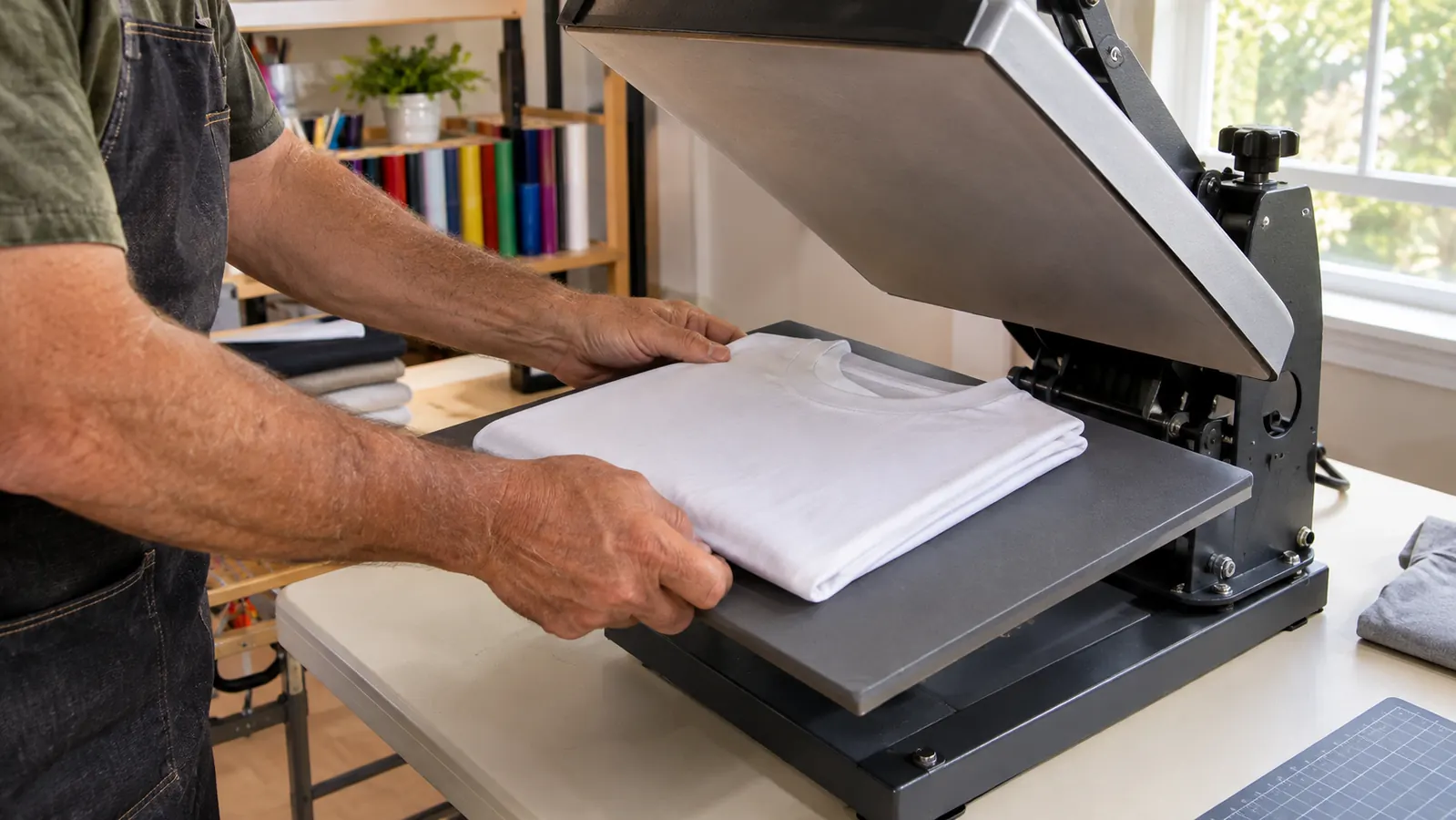
That one mechanical difference changes the whole rhythm of pressing. With a clamshell you reach under the hot platen to slide the shirt in and center it. With a swing-away you lay the shirt flat in front of you, put the design exactly where you want it, and swing the heat over the top. Neither is better in every situation. Each one suits a different workspace and a different way of working, and knowing which one you are before you buy saves a lot of second-guessing.
| Fancierstudio 15x15 | Swing-Away Press | |
|---|---|---|
| Platen movement | Clamshell. Lifts straight up and lowers straight down. | Pivots to the side, fully clear of the table. |
| Loading a shirt | You slide the shirt in from the front, under the heat. | You lay the shirt flat, position it, then swing the heat over. |
| Table space | About the same footprint as the platen itself. | Needs clear space on one side for the swing. |
| Learning curve | Fewer moving parts, easy to figure out in an afternoon. | A little more to learn, still manageable. |
| Price | The most affordable way into a 15x15 platen. | Usually a good deal more for the same platen size. |
| Hoodies and thick blanks | Workable, but the hinge side presses a little heavier. | Presses straight down from above, so thick items sit flatter. |
| Best for | Beginners, small orders, flat blanks pressed one at a time. | All-day pressing, fast placement, bulky items. |
Where Fancierstudio Wins
Price is where the Fancierstudio wins, and for a beginner that matters more than it sounds. You are already buying blanks, vinyl or sublimation paper, a weeding tool, maybe a mug press, and the list goes on. Keeping the press itself affordable leaves room in the budget for all the other stuff you did not plan for. The Fancierstudio has been a go-to starter press for years because it gets you a real 15x15 platen without the price tag of a pro machine. When I add up what my whole setup cost me, the press was the smallest line item, and it is the one that has never given me trouble.
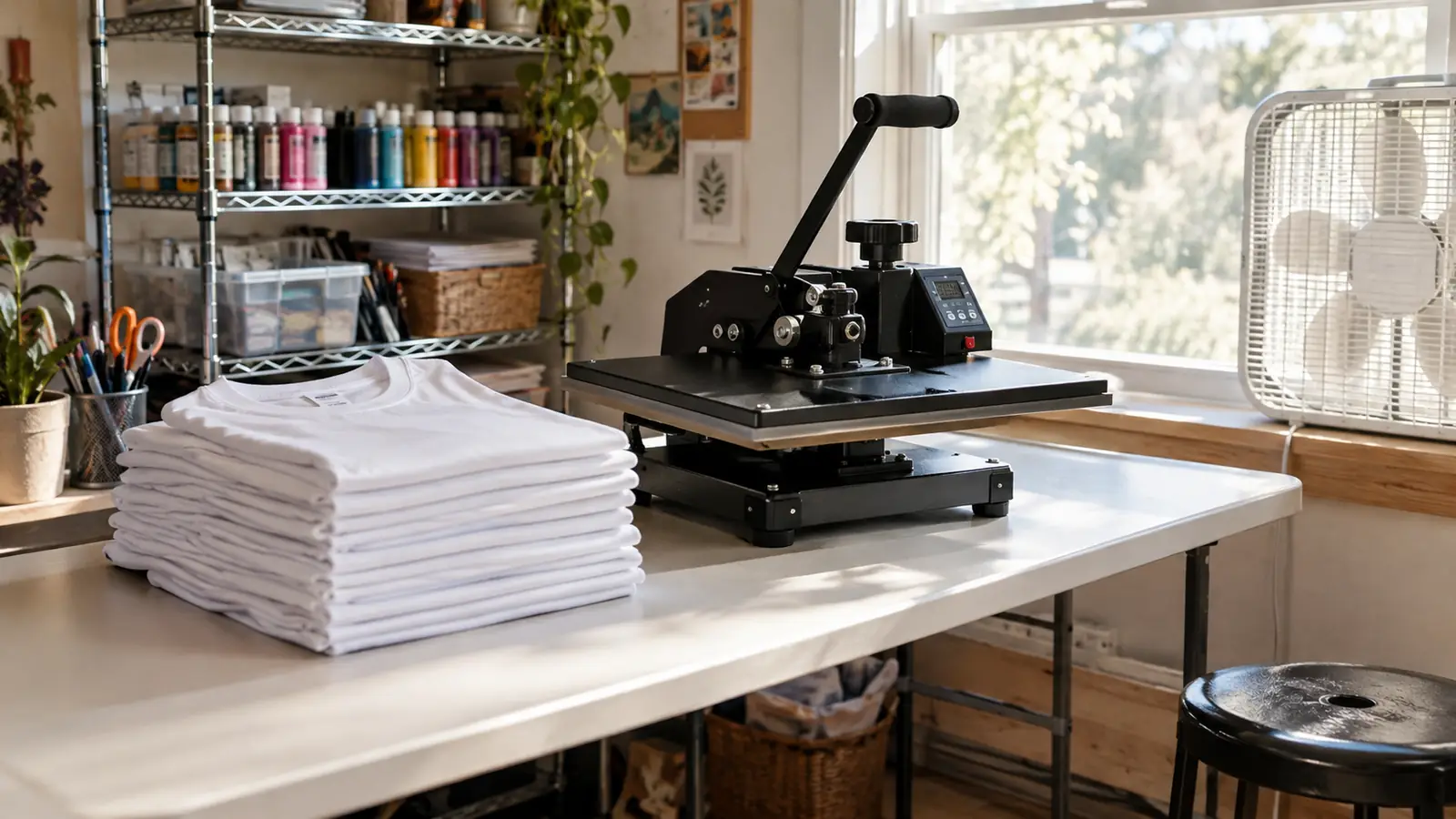
It also earns its keep on a small table. My craft room is a spare bedroom with a folding table, a wire shelf of blanks, and a box fan in the window. The clamshell opens straight up, so it fits against a wall and takes no more room than the platen itself. A swing-away needs clear space on one side for the top to swing out, which means a wider table and a spot in the room where nothing else lives. In my space, that alone would have settled the argument. I do not have a corner to spare, and I suspect a lot of people just starting out do not either.
Where a Swing-Away Wins
The swing-away has one clear advantage: you never reach under a hot platen. With the Fancierstudio, you lift the top, slide the shirt in, and reach under the heat to center it. You get used to it, and the 15x15 platen is small enough that it is not a big deal. But press forty shirts in an afternoon and your forearms feel it, and you learn to be quick about it. A swing-away lets you lay the shirt flat, set the design exactly where you want it, and swing the heat over. Nothing hovers over your hands while you work, and you can see the placement from above the whole time. For someone with wrist trouble or a bad shoulder, that alone could be the deciding factor.
It also handles bulky items better. Hoodies, sweatshirts, anything with a pocket or a zipper, sit flatter when you can press straight down from above. With a clamshell, the hinge side of the platen tends to press a little heavier, and thick seams can be a fight. A friend of mine who presses shirts for a living uses a swing-away for exactly that reason. She presses all day, and the difference shows up in her speed and in her shoulders at the end of a show.
The Fancierstudio 15x15 is the press I would buy again for a spare bedroom
For small orders, flat blanks, and a first press that does the job without emptying your wallet, mine has handled everything I have thrown at it. If that sounds like your situation, check today's price on Amazon.
Amazon Check Today's Price on Amazon →What the Comparison Table Doesn't Show
Specs only go so far. Here is what I learned actually living with the clamshell. The digital controls on the Fancierstudio are simple: set the temperature, set the timer, wait for the beep. The platen heats evenly enough for single shirts, which is all I do. I preheat each blank for a few seconds to knock out wrinkles, then press for the recommended time. I have scorched only a handful of shirts in three years, all of them in my first few weeks, and the worst was my own fault for walking away mid-press to answer the phone. The press did not fail me. I failed the timer. Since then I set the timer on my phone as a backup, and I have not had a single ruined blank.
The thing that surprised me is how much of the difference between presses is habit. The first week with any new press feels awkward. By the second week you know where to place a shirt without thinking. Reaching under the platen, the clamshell's one real downside, became second nature faster than I expected. What did not change is the space it takes, which stayed a non-issue, and the price, which I have never once regretted.
After three years and hundreds of shirts, the press was never the reason a job came out wrong. It was always me rushing the placement.
How They Compare in a Real Week
A typical week for me is a dozen shirts for a church group, maybe a few totes for a family reunion, and a handful of tumblers if the tumbler press is free. Every one of those jobs is small, and none of them needs me to be fast. The clamshell's rhythm, lift, slide, center, lower, works fine at that pace. I can see the platen clearly when I lower it, so my placement is consistent even when I am half listening to the radio. The finished shirts look as good as anything I have seen come off a swing-away at the craft fair.
If I were selling at a show every weekend, I would feel differently. When you have a line of people waiting on custom shirts, the extra two seconds per shirt that the clamshell costs, sliding and centering under the heat, adds up. That is where the swing-away pays for itself. It is not about the quality of the press. It is about how many shirts you can load in an hour without wearing yourself out.
What I'd Tell a Friend Starting Out
Start with the press that fits the room you have, not the one that looks most impressive in a photo. A 15x15 platen is the right size for adult shirts, and both machines press that platen. The Fancierstudio gets you that size at a starter price, and if you discover after six months that pressing is not for you, you are not out a fortune. If you discover you love it, you will know exactly what to look for when you upgrade.
Also, whatever you buy, spend the first afternoon practicing on old shirts or thrift store blanks. Learn how your press heats, where the hot spots are, and how long your vinyl needs. A small mistake on a practice blank beats a big mistake on a shirt you promised somebody. That advice applies to a clamshell and a swing-away exactly the same.
What to Look For in Any Heat Press
Whatever you choose, a few things matter more than clamshell versus swing-away. Look for digital temperature control and a digital timer, not dials you have to guess at. The Fancierstudio has both, and they are the reason I trust it with shirts I promised to somebody. A knob you can bump out of place is how you end up pressing a shirt at the wrong temperature and not knowing until it peels.
Look for a pressure adjustment you can actually feel. Too little pressure and your design does not stick. Too much and you can leave a mark on the shirt, especially on thin blanks. The Fancierstudio has a knob on top that I turn until the platen sits firm and even. You will develop your own feel for it within a few presses, and that feel carries over to any press you buy later.
Who Should Buy Which
Buy the Fancierstudio 15x15 if you are starting out, pressing for a church group or a few family reunions, and working on a folding table in a spare room. It is the press I would tell my own friend to start with. The price leaves room in your budget for blanks and vinyl, the footprint fits a bedroom, and the learning curve is gentle enough that you will be pressing a decent shirt by your second afternoon.
Choose a swing-away if you press most days, sell at shows most weekends, or plan to do a lot of hoodies and thick blanks. The faster loading and the flat placement surface are worth the extra money and the extra table space. And if you are still unsure, start with the clamshell. You will learn what you want from a press faster than any review can tell you, and you can upgrade later without feeling like you wasted your first investment.
The press that fits your table is the press you will actually use
The Fancierstudio 15x15 is the clamshell I still use in my spare bedroom, and it is the one I recommend to anyone asking where to start. Check today's price on Amazon and see if it fits your setup.
Amazon Check Today's Price on Amazon →