I have a confession to make. I bought my Fancierstudio heat press for one reason, and one reason only: my grandson Caleb's youth baseball team needed shirts, and I was tired of watching the ones from the print shop peel after two washes. That was three years ago. The press is still on the same folding table in my spare bedroom, and somewhere along the way, those team shirts turned into a little side business I actually look forward to on weekends.
I am not a professional printer. I am a former school cafeteria manager from Lincoln, Nebraska, who figured out that a 15 by 15 platen, a roll of transfer paper, and a patient afternoon could make a shirt that did not embarrass a ten-year-old. What I did not expect was how many other people would want one too. The church group asked for tote bags. The family reunion asked for mugs. The fall craft fair asked for everything.
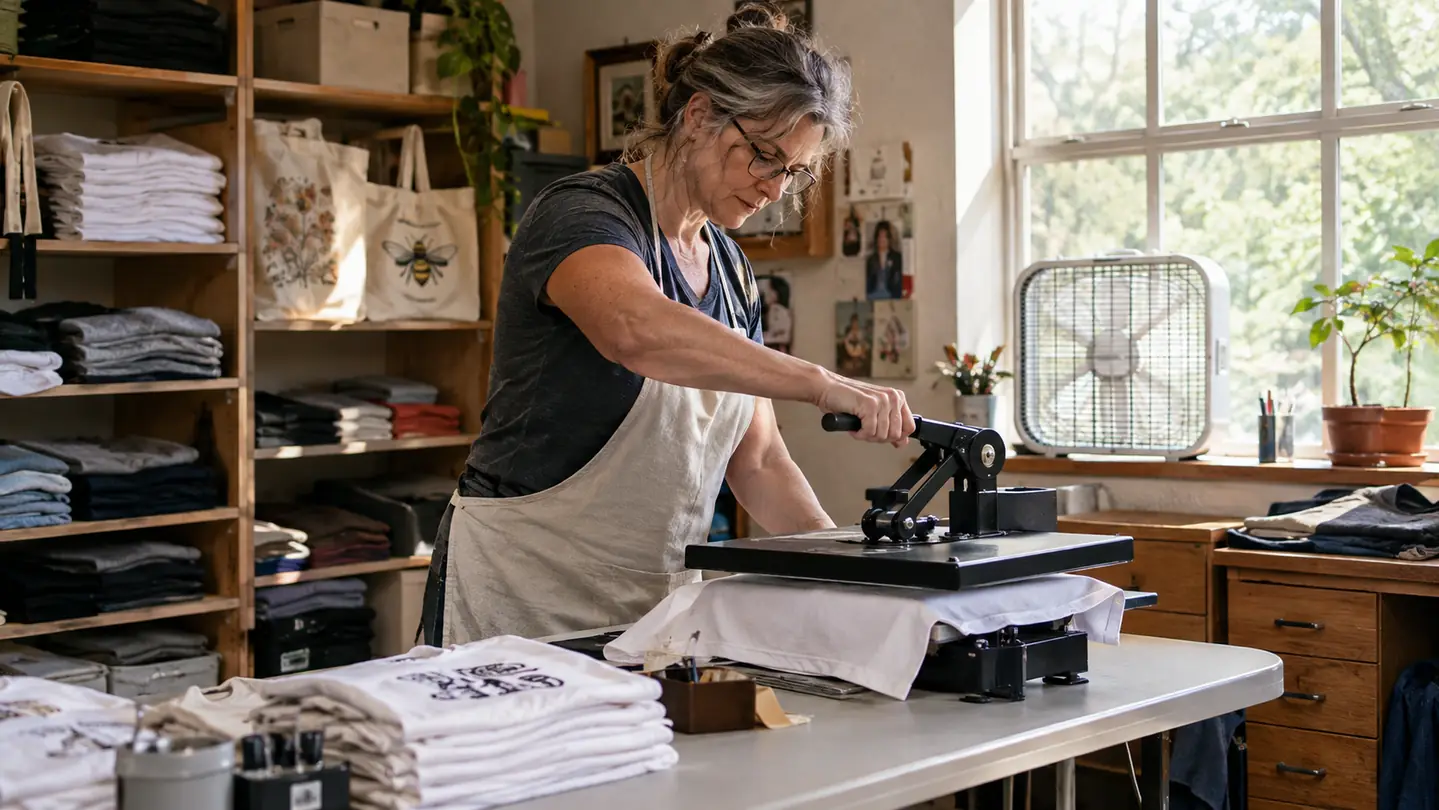
So this is not a review from someone who presses shirts for a living. It is a review from someone who presses shirts on a folding table between a wire shelf of blanks and a box fan, and who has scorched enough fabric to know exactly what she is talking about.
If you have been eyeing a heat press for your own spare bedroom, here is what three years of weekend pressing with the Fancierstudio has actually been like.
The first shirt I pressed with the Fancierstudio came out straight on the first try. That has never happened with any other craft tool I own.
The press that made my first shirt come out straight
Three years in, my Fancierstudio 15x15 is still the press I reach for when I need a shirt done right. See today's price on Amazon and read what real owners say.
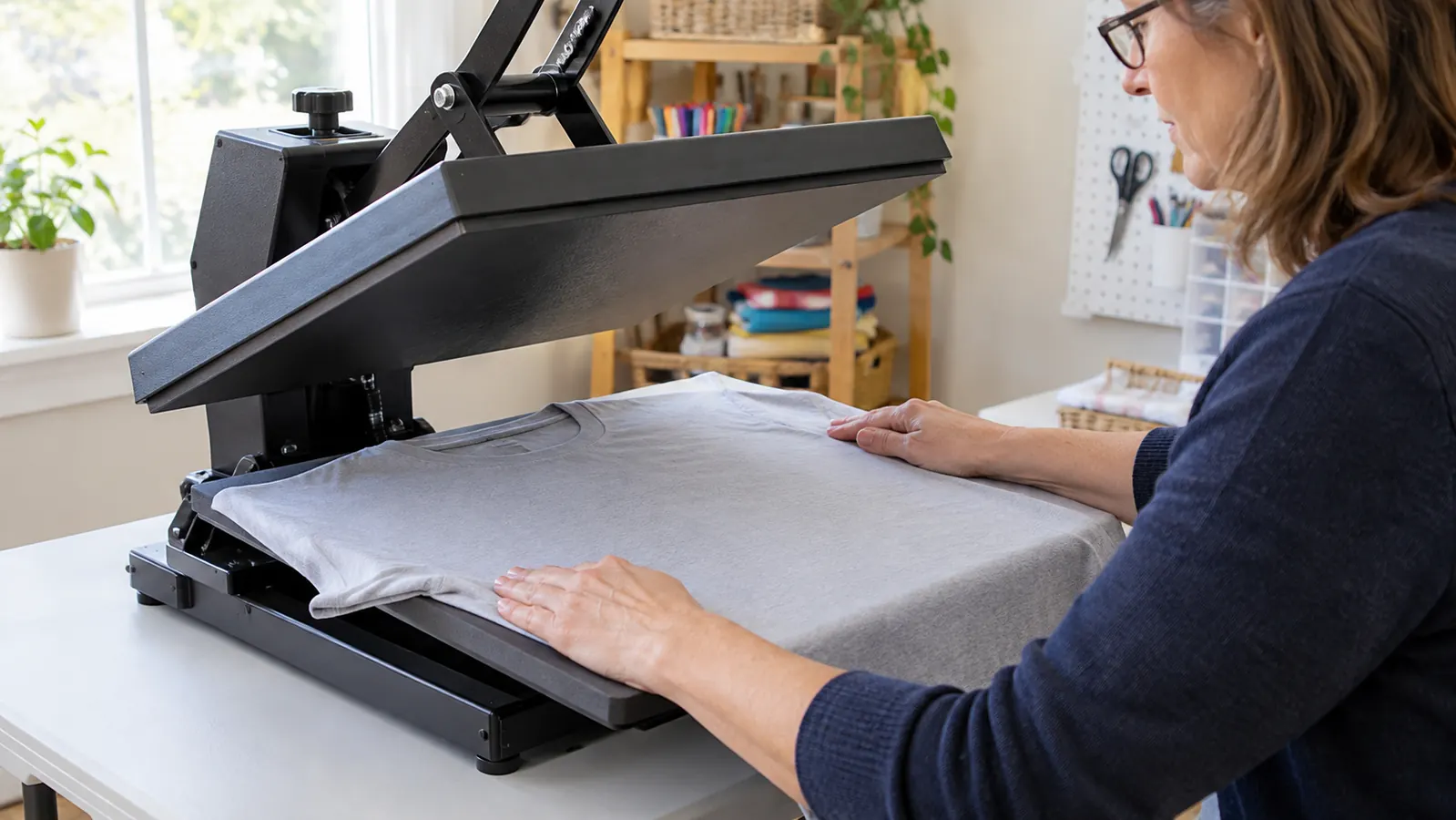
Amazon Check Today's Price on Amazon →The first thing you notice is the weight. This is not a toy you have to hold down with one hand while you pray. The Fancierstudio press sits solid on the table, the handle locks with a satisfying clunk, and the platen comes down evenly across the whole shirt. For someone like me, who had never touched a heat press before, that even pressure was the difference between a shirt that looked professional and a shirt that looked like I had ironed it with a brick.
The digital temperature control is simple enough for a beginner. I set it, I wait for the light, I press. The timer beeps when it is done. That is the whole job. The handful of shirts I ruined were all in my first few weeks, and every one was my fault, not the machine's. I left a shirt on too long while I answered the phone, and the transfer came out dark and shiny. The press did what I asked. I was the one who walked away.
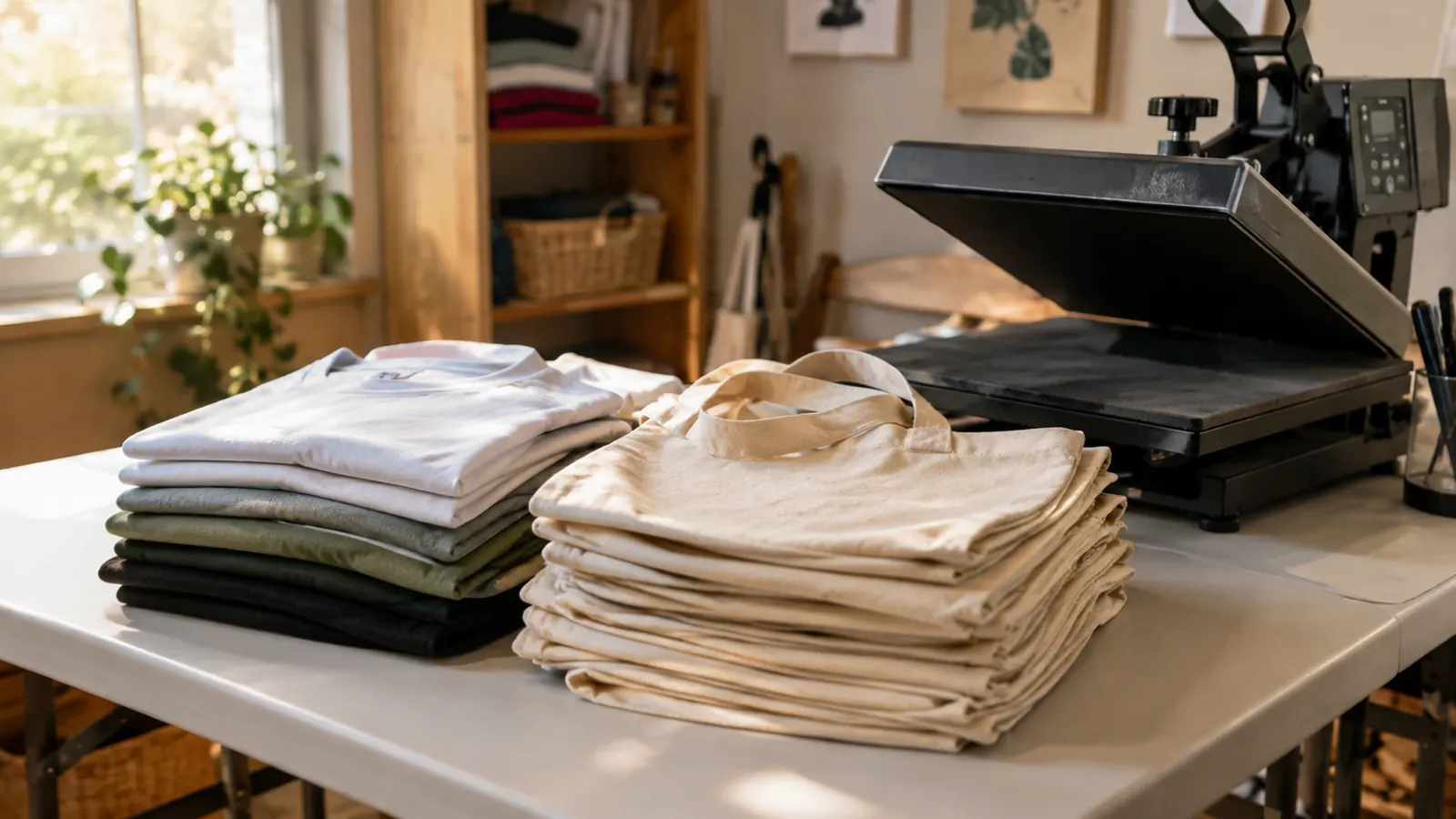
What surprised me most is how much I use the same press for different things. Shirts for Caleb's team, yes. But also tote bags for the church picnic, tea towels for the craft fair, and little square patches for the back of denim jackets. The 15 by 15 platen handles all of it. I have never once wished I had bought a smaller one.
My husband Ron, who retired last year, was skeptical at first. He said we did not have room for another hobby. Now he is the one who helps me fold the finished shirts and loads the car for craft fairs. Last month he asked if we could press a shirt for his bowling league. I told him to pick a color and get in line.
The honest part: there is a learning curve, and it is mostly about your blanks, not the machine. Some shirts shrink. Some transfer papers ghost. Some mugs come out streaky. I wasted a fair amount of money on cheap blanks before I learned to buy the ones that hold up. The Fancierstudio press was never the problem. It just sat there, heating evenly, waiting for me to figure out the rest.
What I'd Tell You If We Were Sitting at My Kitchen Table
If you came over for coffee and told me you were thinking about a heat press, here is what I would say. Buy the 15 by 15. You will outgrow a smaller one faster than you think, and the bigger platen means you can press a tote bag flat without repositioning. Get one with a solid base and a handle that locks, because you will press a lot of shirts, and your shoulder will thank you. And do not buy the most expensive machine on the market for your first one. Buy a good, honest press like the Fancierstudio, learn on it, and upgrade later only if you actually need to.
I would also tell you to keep your expectations reasonable. A heat press will not make you a graphic designer. It will not fix a bad transfer. It will not turn a cheap blank into a premium shirt. What it will do is press your design onto the fabric evenly, every single time, so the only variable left is you. That is a bigger deal than it sounds. When I started, I blamed my iron for every crooked shirt. Now I know the truth: the press was never the problem. It was the person holding the iron.
Three years in, my spare bedroom still looks like a craft room, not a factory. There is a long folding table, a wire shelf of blanks, a box fan in the window, and a Fancierstudio press that has paid for itself many times over in shirts I did not have to buy from a print shop. If you are on the fence, that is my honest advice: get a good press, learn on it, and let the weekends take care of themselves.
Start with the press I still use every weekend
My Fancierstudio 15x15 has pressed hundreds of shirts, totes, and tea towels without missing a beat. Check today's price on Amazon and see why it is the press I recommend to friends.
Amazon Check Today's Price on Amazon →