I will be honest with you: when I started pressing shirts for my grandson Caleb's youth baseball team three years ago, I bought the cheapest sublimation paper I could find. I figured paper was paper, and I was on a tight budget after buying the heat press, the printer and a stack of blanks. Three years later, after a lot of scorched shirts, ghosted tumblers and one very frustrating craft fair, I have landed on A-SUB Sublimation Paper, and I am not shy about why. This is the review I wish somebody had handed me before I wasted my first ream.
The Quick Verdict
A-SUB Sublimation Paper is the most dependable sublimation paper I have used in my home craft room. It is not the cheapest, but it saves blanks, time and frustration, which matters more when you are paying for every mistake yourself.
Amazon Check Today's Price →Tired of ghosted tumblers and faded shirts?
A-SUB Sublimation Paper is the brand I keep coming back to after three years of home pressing. It holds ink, releases clean and does not curl on me mid-print.
Amazon Check Today's Price on Amazon →How I've Used It
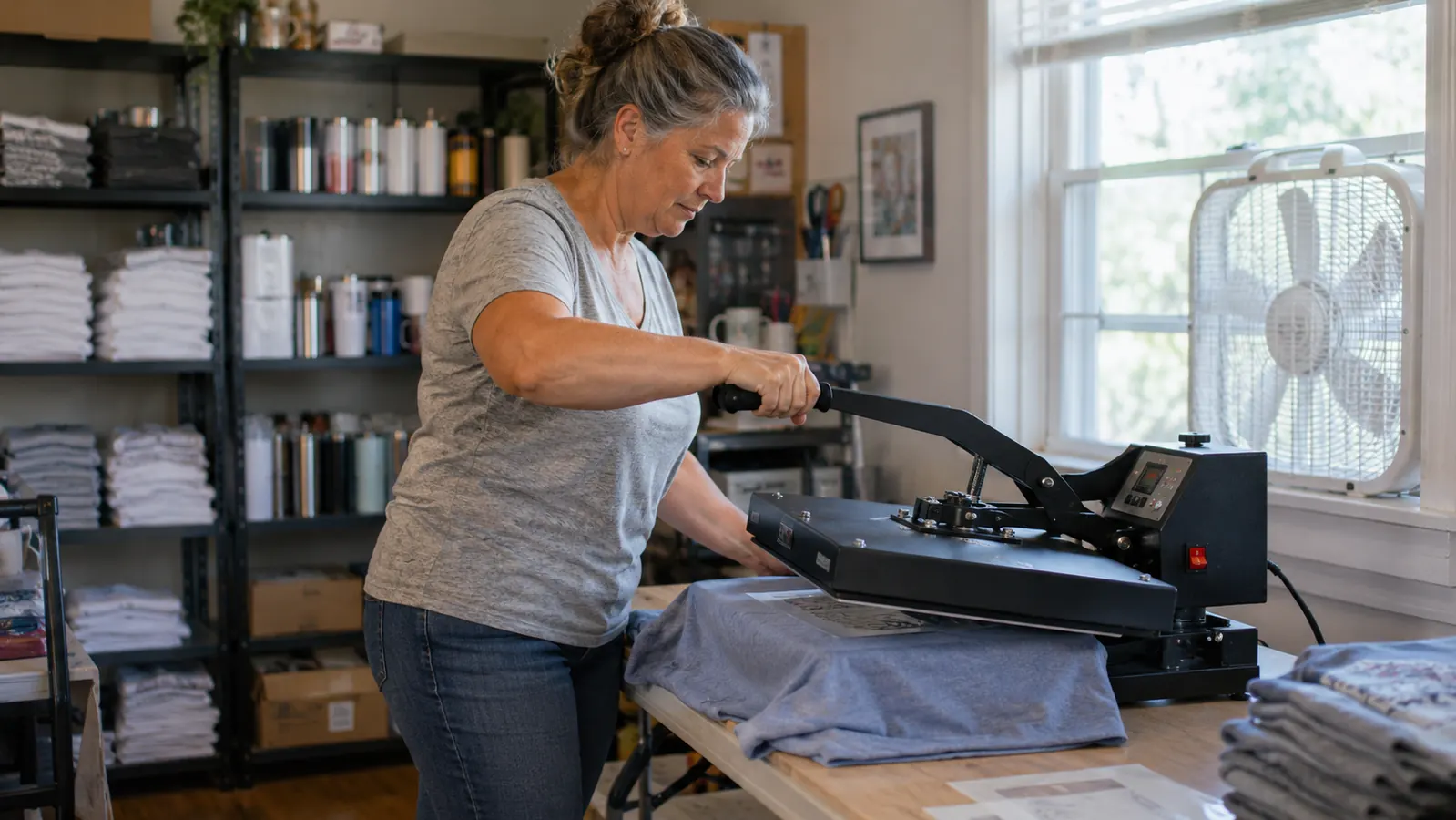
My setup is not fancy. I work in the spare bedroom on a long folding table, with a wire shelf of blanks beside me and a box fan in the window. I have a basic heat press, an Epson printer I converted for sublimation, and a stack of A-SUB Sublimation Paper in 8.5x11 inch, 110 sheets, 125g. That is the size that fits my printer and the size I reach for most days.
I use it for shirts, tote bags, tumblers, mugs and the occasional mousepad for the church office. Most of my orders are small: a dozen shirts for a family reunion, a few tumblers for a teacher appreciation week, a batch of tote bags for the fall craft fair. I am not a production shop. I am a woman with a heat press and a deadline, and I need paper that does not add drama to my day.
Last March is a good example of a normal week. The church youth group asked for sixteen shirts for their spring lock-in, and the same week the school called about forty tote bags for the fifth grade reading program. Those are small orders, but they have to be right the first time, because I am not charging enough to redo anything. I printed all of it on A-SUB paper over two evenings. Every sheet fed straight, every shirt came out clean, and I was done by Thursday instead of Sunday. That is the whole reason I keep buying this brand.
Over the last year I have gone through maybe twenty packs of A-SUB paper. I have used it in summer heat with the box fan blowing, in dry winter air with the furnace running, and in every humidity level Nebraska can throw at a craft room. That is the testing ground this review comes from. I have also run a few sheets through a borrowed printer at a friend's house, just to see if the paper was doing the work or my machine was. It did the work.
What Nobody Tells You About Sublimation Paper
Here is the thing they do not put on the package: sublimation paper is not all the same. The cheap paper I started with bled ink, left ghost images on my press mat, and curled at the edges so badly I had to fight it into the printer. I assumed I was doing something wrong. Sometimes I was. But a lot of the time, the paper was the problem.
A-SUB paper is different in the ways that actually matter to a home crafter. It holds the ink on the surface instead of letting it soak in, which means more of the design transfers to the blank. It releases cleanly, so I do not get those faint second images on the next shirt. And it stays flat, which sounds like a small thing until you have wrestled a curled sheet into a printer at 7 in the morning.
Here is what I wish someone had told me, plain: the paper is half of your print quality, the ink is the other half, and the press settings are the third half. That is three halves, and it takes a while to get them all lined up. When I switched to A-SUB, I kept the same ink and the same press, so the only thing that changed was the paper. The difference was immediate. That tells me the paper was carrying more of the job than I ever gave it credit for.
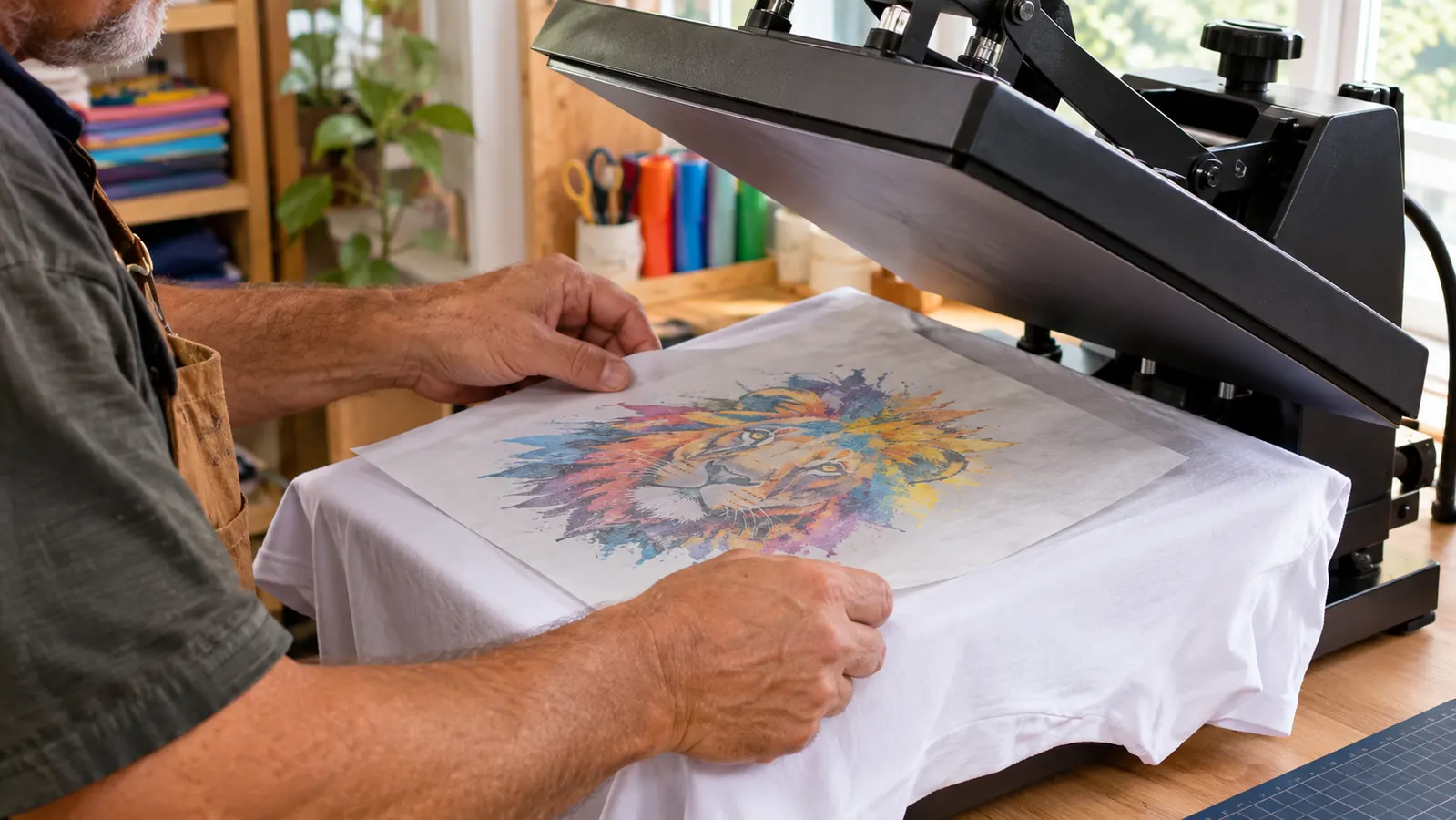
One Saturday in April I ran what I call my test sheet. I printed the same little logo, a baseball and the number 6 for Caleb, onto five different brands of paper I had sitting in a box, and pressed them onto five identical shirts. Same ink, same settings, same press, same day. The differences were not subtle. The A-SUB shirt was the only one that survived a wash test a week later without fading on the edges. I still have that shirt. It is the one I grab to show people why the paper matters.
The first time I pressed a shirt with A-SUB paper, I actually checked my settings twice because the transfer came out too clean. I was used to fighting my paper. I did not know what to do with one that behaved.
The Ink and Color Question
Let me talk about color, because that is where a lot of the online chatter gets confusing. A-SUB paper is designed to work with sublimation ink, and it does a good job of holding that ink where it belongs. On white shirts, my colors come out bright and true. On tumblers, the designs look crisp after pressing, with none of the muddy edges I got with cheaper paper.
I have also learned the hard way that paper cannot fix a bad print profile. If your colors look washed out, check your printer settings before you blame the paper. A-SUB paper will not turn a poorly calibrated printer into a perfect one. What it will do is give you a consistent base, so when you do get your settings right, you can trust the result every single time.
The day I figured this out was a Tuesday in February. I had printed a batch of tumblers for the church women's group and the design came off looking orange when it should have been red. My first instinct was to blame the new pack of paper. I was wrong. The paper was fine. I had bumped the color settings on my printer the week before while I was trying to fix a different project, and I had not bumped them back. Once I reset the profile, the very next tumbler came out the right red.
The other thing nobody tells you: humidity changes how sublimation ink behaves on paper. On a muggy day in July I printed forty sheets for the fall craft fair and the ink looked dry when it came out of the printer, but it was still slightly tacky, and two of the designs smeared in the press. That was not a paper failure. That was a Nebraska summer. I learned to print the night before a big pressing day and let the sheets sit flat in the craft room overnight. A-SUB paper holds up fine that way. The problem had been me, not the pack.
What It's Actually Like to Use
The 125g weight is the sweet spot for me. It is sturdy enough to feed through my printer without jamming, but not so thick that it feels like cardstock. I have printed hundreds of sheets and I can count the jams on one hand. That is not something I could say about the budget paper I started with.
The 8.5x11 inch size is the standard letter size, which means it fits most home printers without any trimming. I like that I can print a full page design or cut the sheet down for smaller items like coasters and keychains. The 110 sheet count means I am not reordering every week, even when I have a big batch of tumblers to finish.
If you are going to cut the sheets, do it right. I use a paper trimmer and I cut only what I need for the current job, because cut edges curl faster than factory edges. For coasters I cut each 8.5x11 sheet into four pieces, which gives me forty coasters per pack if I am careful. For the inside of a tumbler I cut a strip that just fits the blank. I keep the scraps in a zip bag and use them for test prints, so very little goes to waste.
One small warning about storage: because the paper arrives as a flat stack, not a roll, it wants to stay flat. I keep my open pack between two pieces of scrap cardboard on the bottom shelf of my wire rack, with a heavy book on top. If you leave it standing on edge in a damp basement, it will pick up moisture and the edges will curl. I learned that the hard way in my first year, and it cost me a few sheets that would not feed straight.
The Wednesday before Thanksgiving I pressed twenty-four tumblers for the teacher appreciation table at church. That is a lot of tumblers for me, and each one takes a few minutes. I printed the sheets the night before, pressed in batches of four, and every single one came out clean. With the cheaper paper, I would have expected at least one or two to ghost or shift. With A-SUB, I got through the whole order and my only problem was a tired back.
Where A-SUB Paper Shines
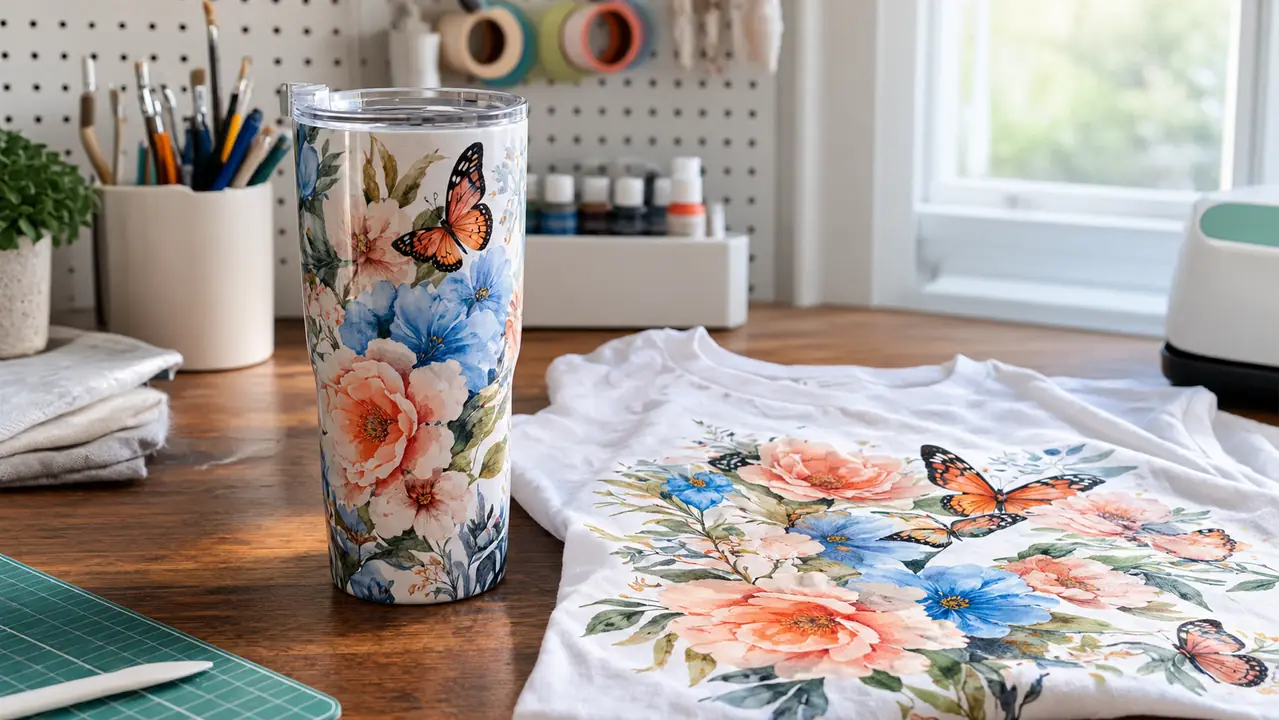
For my money, A-SUB paper shines in three places. First, tumblers. Tumbler pressing is unforgiving. If the paper shifts or the ink does not release evenly, you get a ghosted mess, and a ghosted tumbler is not something you can fix by pressing it again. A-SUB paper has given me the most consistent tumbler results of any brand I have tried.
Second, detailed designs. I make a lot of shirts with small text and fine lines, and A-SUB paper holds those details better than the budget brands. I do a big order every year for the school's fifth grade reading program, forty tote bags with the program logo in small type. That logo is small enough that any bleed shows. On A-SUB paper, every letter stayed sharp.
Third, batch work. When I am pressing twenty shirts for a school spirit day, I need every sheet to behave the same way. A-SUB paper is boringly consistent, and I mean that as a compliment. The first sheet out of the pack prints exactly like the hundredth sheet out of the pack. That consistency is the whole reason I can take on orders at all, because I am not gambling on whether the back half of the pack will behave.
The Downsides Nobody Mentions
I promised an honest review, so here are the downsides. A-SUB paper costs more than the no-name brands, and if you are on a tight budget, that difference is real. It also has a learning curve if you are used to cheaper paper, because it releases ink differently and you may need to adjust your press time and temperature. And while the 110 sheet count is generous, the paper comes in a flat pack, so you need to store it carefully to keep it flat and dry.
There is one more thing I want to mention, and it is the thing that almost made me give up on sublimation entirely: ghosting. Ghosting is that faint, blurry second image that appears on your blank when the paper shifts during pressing. It ruined more of my early projects than any other mistake. A-SUB paper does not eliminate ghosting by itself. You still have to tape your paper down and use the right pressure. But because the paper releases cleanly, I have far fewer ghosting problems than I did with the budget brands. That alone has saved me a pile of ruined blanks.
Let me tell you exactly what I tried before I understood that. In my first few weeks I ruined six tumblers in one weekend using cheap paper. I tried lowering the pressure. I tried taping the paper on all four sides. I tried pressing for less time. None of it fixed the ghosting, because the problem was the paper letting the ink release when it wanted to, not when I wanted it to. I switched to A-SUB the next week, kept my pressure and tape method the same, and the ghosting mostly went away. The lesson stuck with me: you cannot press your way out of a paper problem.
The cost math matters too, and I want to be plain about it. A ruined shirt blank has to be replaced. A ruined tumbler blank has to be replaced. When you price craft fair items low enough to actually sell them, you do not have room in that price to eat many do-overs. I would rather pay more per sheet and waste almost nothing than pay less per sheet and throw away blanks. That is the honest tradeoff, and it is the reason I stay with A-SUB even though it is not the cheapest pack on the shelf.
What I Liked
- Consistent, clean ink release on shirts, tumblers and mugs
- Stays flat in the printer, very few jams
- Holds fine details and small text well
- Large 110 sheet pack means fewer reorders
- Works with standard 8.5x11 home printers
Where It Falls Short
- Costs more than budget sublimation paper
- Needs a short adjustment period if you are switching brands
- Flat pack requires careful storage to stay flat and dry
Who This Is For
A-SUB Sublimation Paper is for the home crafter who is past the experimental stage. If you are pressing shirts for your kid's team, making tumblers for teacher gifts, or building up inventory for a craft fair, you want paper that behaves the same way every time. A-SUB paper gives you that. It is also for anyone who is tired of blaming themselves for every faded print, only to realize the paper was the problem all along. If that sounds like you, this review is the one I wish I had read.
Who Should Skip It
If you are just trying sublimation for the first time and you are not sure you will stick with it, you might start with a cheaper pack to learn the basics. And if you only press a few items a year, the higher cost of A-SUB paper may not be worth it to you. But if you are pressing regularly and you are tired of wasted blanks, this is the paper I would buy again. In fact, I already have.
Ready to stop fighting your paper?
A-SUB Sublimation Paper is the brand I trust for every batch of shirts, tumblers and tote bags I press. See what it costs today.
Amazon Check Today's Price on Amazon →